
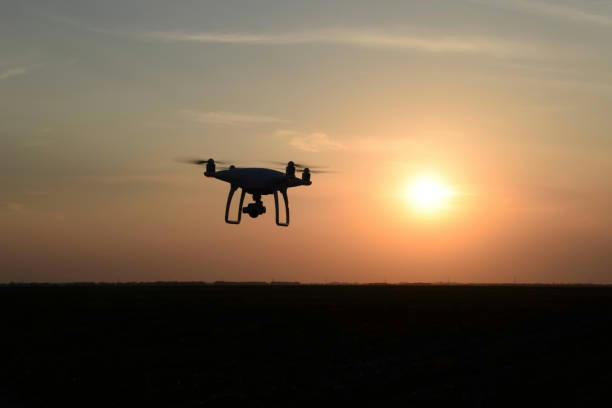
The Impact of Autonomous Drone Technology
They are relatively inexpensive, can be built from commonly available components, can be very small and light or large and heavy, can pack customizable payloads from fancy sensors to releasable matter, they are programmable, they fly, and now are even becoming autonomous. How could autonomous drone technology not make a difference?
With autonomous drone technology, we refer to a set of hardware and software systems designed and deployed to enable unmanned operations for aerial vehicles (UAVs), i.e., to perform tasks without, or significantly reduced, depending on the applications, direct human input.
These systems integrate onboard sensors, actuators, compute (processors), and perception, planning, and control algorithms to operate with agency in structured and unstructured environments. While the technology in itself is not necessarily novel, the versatility and speed of small flying platforms, now particularly accessible on the market, expose diverse applications: from surveillance, inspection, entertainment, and defense.
Introduction to autonomous drone technology
The first autonomous systems were developed for “dull, dirty, or dangerous” tasks that no human would want to be involved with.
As with many technological advancements throughout history, the application field for the first aerial autonomous systems was the military. Surely, deploying technology to substitute humans and enable, at least, remote operation was more cost-effective and safer (for the pilot) to train a top gun.
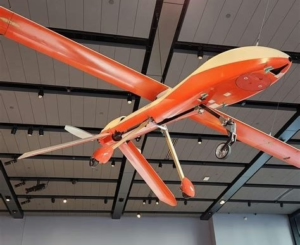
The evolution of autonomous drone technology progressed from unmanned balloons driven by wind currents, to satellites opening the doors to the space race, to manually piloted hobbyist quadcopter models (FPV drones), to fully autonomous systems used in defense, research, and industry.
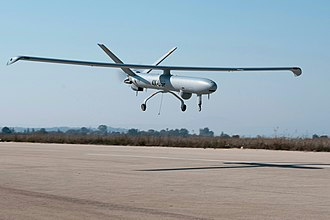
Early UAVs relied on remote control and line-of-sight operation. These gave way to DIY (Do-It-Yourself) platforms with limited autonomy, followed by commercial drones with partial autonomy features. High-cost military-grade UAVs introduced onboard navigation and mission logic, setting the foundation for scalable autonomous systems.
Today, autonomous drones are commercially available at a lower cost and with greater functionality.
What is an autonomous drone?
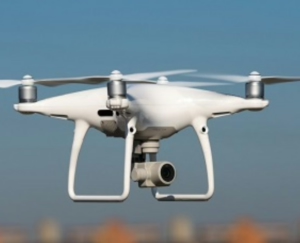
An autonomous drone is a robot that flies.
Also known as an unmanned aerial vehicle (UAV), it integrates:
- perception (sensors and cameras)
- planning (decision-making algorithms)
- control (flight stabilization and navigation systems)
After mission initialization, it uses real-time data to adapt, navigate, and complete tasks such as mapping, inspection, or delivery with minimal external input.
How does an autonomous drone work?
A drone becomes autonomous through the integration of sensing, planning, computation, and control systems. This architecture mirrors the general robotic autonomy framework as used in Duckietown’s Duckiebots.
- Perception
Autonomous drones rely on GPS, inertial measurement units (IMUs), cameras, and LiDAR for localization, stability, and environment mapping. Visual SLAM algorithms process visual input to build real-time maps, while sensor fusion improves positional accuracy. Obstacle detection systems identify and respond to hazards dynamically. - Planning
Onboard processors execute autonomy logic, enabling task-level decision-making such as waypoint navigation, path planning, and contingency handling. AI algorithms, including machine learning models, support behavior adaptation in uncertain or changing environments. - Control
Autonomous flight is maintained through closed-loop controllers (PID or MPC) that stabilize attitude and velocity. These controllers respond to sensor feedback with low latency, ensuring precise tracking of planned trajectories.
All components are managed on-device or via distributed systems, allowing near real-time, closed-loop autonomy in both simulation and physical environments.
Applications of autonomous drone technology
Autonomous drone technology is now embedded across multiple sectors due to its ability to operate efficiently in complex environments with minimal human input. In disaster response, autonomous drones are deployed for search-and-rescue, thermal imaging, and terrain mapping, such as in the aftermath of the 2023 Turkey earthquake. In agriculture, drones are used for crop health monitoring, variable-rate spraying, and field analytics, improving yield while minimizing resource usage.
High-resolution aerial mapping enables access to remote or previously unreachable areas, supporting urban planning, mining, and environmental monitoring. Surveillance applications span public safety, wildlife conservation, and infrastructure security. Law enforcement and military units use autonomous drones for reconnaissance, perimeter control, and battlefield situational awareness widely observed during the COVID-19 pandemic.
Autonomous drones also support industrial inspection tasks such as monitoring bridges, pipelines, and transmission lines. Outside functional domains, drones are being integrated into entertainment, with autonomous swarms enabling large-scale aerial light shows.
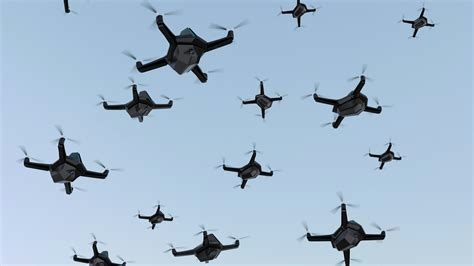
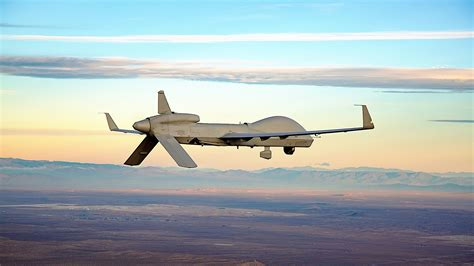
Surveillance and security
Autonomous drones are adopted in surveillance and security due to their ability to operate with minimal human oversight and efficiently cover large or inaccessible areas. Equipped with high-resolution cameras, thermal sensors, and onboard AI, these systems provide continuous monitoring of borders, critical infrastructure, and urban zones.
They enable rapid detection of anomalies, unauthorized access, and security breaches, supporting law enforcement and emergency response with actionable intelligence. Autonomous flight paths, geofencing, and automated alerting enhance situational awareness and reduce response latency.
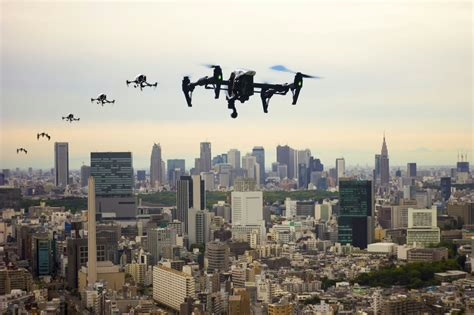
Mapping and surveying
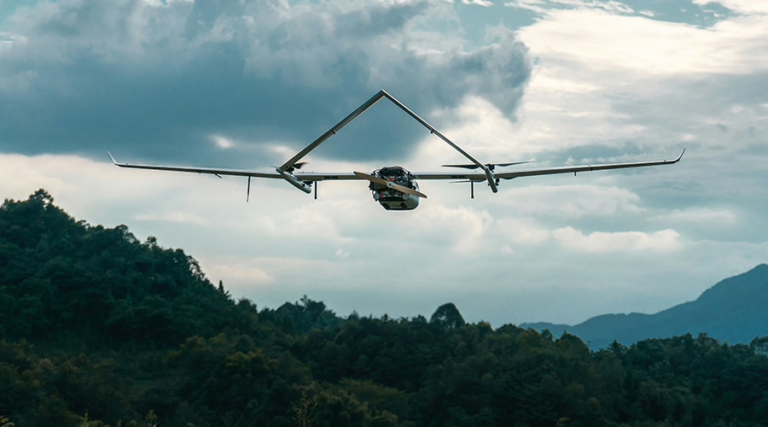
Autonomous drones are redefining mapping and surveying by enabling fast, high-resolution, and repeatable data collection across varied and complex terrains. Equipped with GPS, LiDAR, and optical or multispectral imaging systems, these drones generate accurate 2D orthomosaics and 3D models for use in construction, agriculture, environmental analysis, and urban planning.
Autonomous flight along predefined routes ensures consistent data capture over time, enabling longitudinal studies and frequent map updates. This approach reduces manual labor, improves safety in inaccessible or hazardous zones, and lowers operational costs while increasing spatial and temporal data resolution supporting more informed, real-time decision-making across industries.
Equipment inspection and maintenance
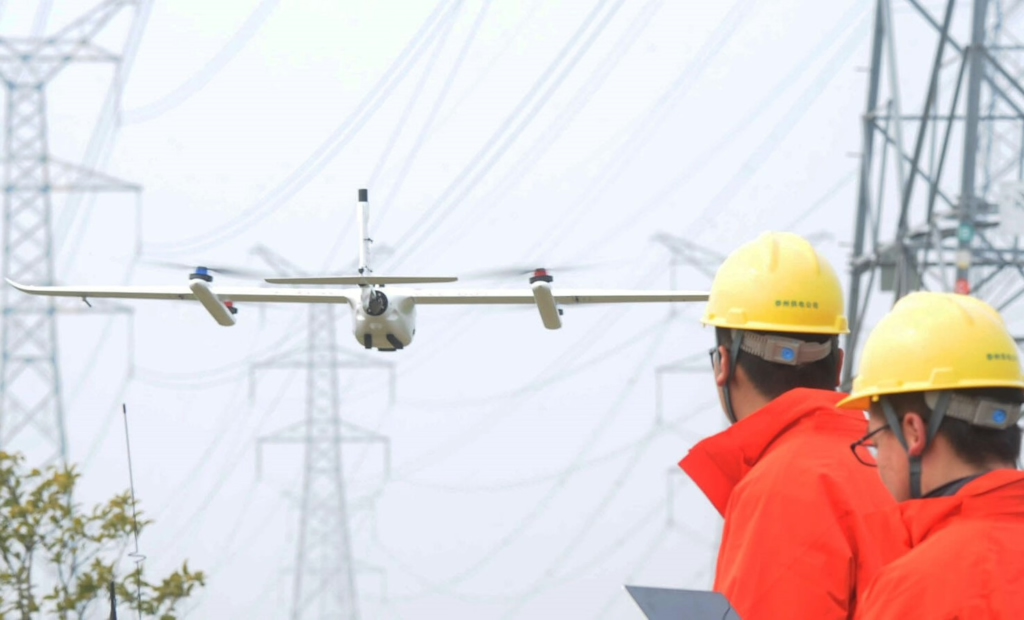
Autonomous drones are transforming infrastructure and equipment inspection by enabling safe, efficient, and high-precision assessments of assets such as power lines, pipelines, wind turbines, and bridges. Using high-resolution cameras, thermal sensors, and LiDAR systems, these drones identify structural anomalies including cracks, corrosion, thermal hotspots, and mechanical degradation.
Autonomous flight paths allow for consistent, repeatable inspections without the need for scaffolding, rope access, or shutdowns. This reduces operational risk, lowers inspection costs, and minimizes downtime while improving data accuracy and maintenance scheduling. Autonomous drones play a vital role in predictive maintenance and asset lifecycle management by safely reaching confined or hazardous areas, allowing for detailed inspections and data collection without interrupting regular operations.
Disaster response
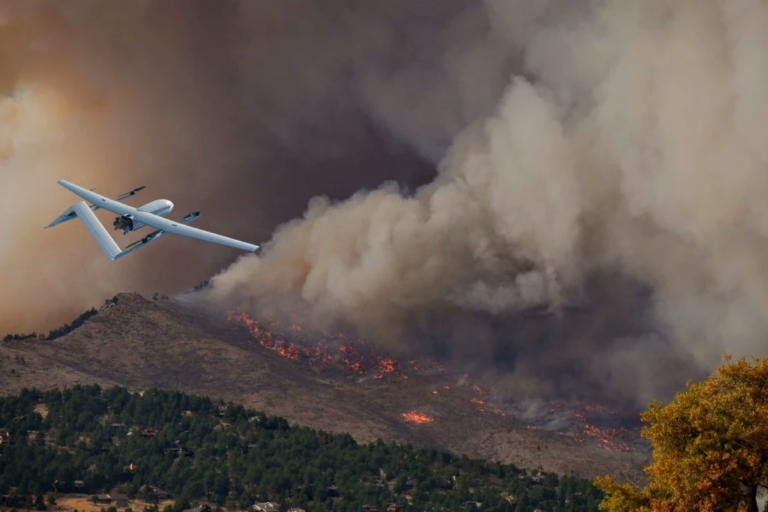
Autonomous drones are critical tools in disaster response operations, offering rapid situational awareness, real-time data collection, and logistical support in environments that are often inaccessible or unsafe for human responders. Outfitted with thermal imaging, environmental sensors, and live communication links, these systems assist in locating survivors, assessing structural damage, mapping affected zones, and delivering essential supplies.
Pre-programmed flight plans and autonomous navigation enable consistent coverage of target areas under time-sensitive and hazardous conditions. Their deployment accelerates decision-making, improves coordination among emergency services, and enhances overall response efficiency reducing human risk and supporting faster recovery operations.
Agriculture
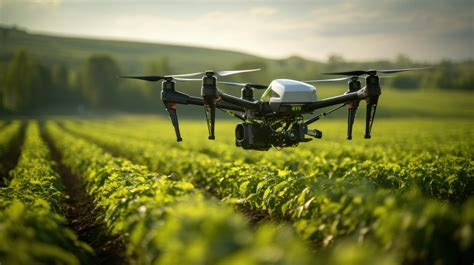
Autonomous drones are advancing agricultural operations through enhanced crop monitoring, precision farming, and data-driven decision-making. Using multispectral and thermal imaging sensors, these drones capture high-resolution imagery to assess plant health, soil moisture, nutrient levels, and early signs of pest infestation or disease.
Autonomous flight paths enable rapid, repeatable coverage of large areas, facilitating targeted interventions such as variable-rate irrigation, fertilization, and pesticide application. This approach improves yield, optimizes resource utilization, reduces environmental impact, and lowers labor requirements supporting scalable, efficient farm management.
Military operations
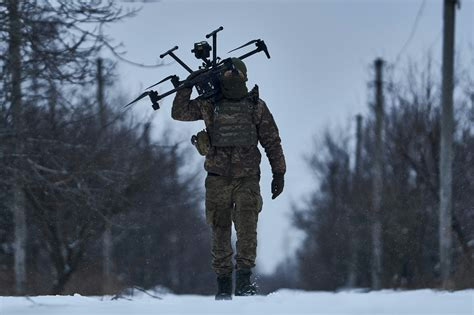
Autonomous drones are widely integrated into modern military operations, serving roles in surveillance, reconnaissance, target acquisition, and precision strike execution. Their autonomous navigation capabilities enable extended missions with minimal operator input, reducing risk to personnel and maintaining persistent situational awareness over contested or inaccessible areas.
Outfitted with electro-optical sensors, infrared imaging, and optionally, guided munitions, these systems provide real-time intelligence, monitor enemy movement, and support tactical decision-making. Autonomous drones offer a scalable, cost-effective alternative to manned assets, contributing to both defensive posture and offensive operations in multi-domain environments.
Delivery
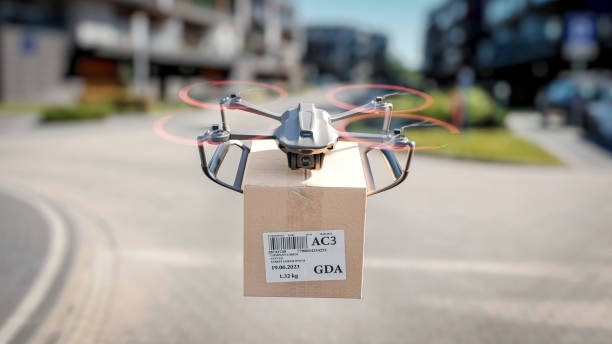
Autonomous drones are reshaping logistics by enabling fast, cost-efficient, and scalable delivery of goods. Using GPS, inertial navigation systems, and real-time obstacle avoidance, these drones execute short- to medium-range missions for transporting packages, medical supplies, and food without human intervention.
Autonomous routing allows for bypassing ground traffic and accessing remote or congested urban zones where conventional delivery is constrained. This reduces delivery time, lowers labor costs, and minimizes carbon emissions compared to traditional vehicles. As regulatory frameworks and technologies mature, autonomous drone delivery is positioned to become a core element of last-mile logistics and e-commerce fulfillment.
The future of autonomous drones
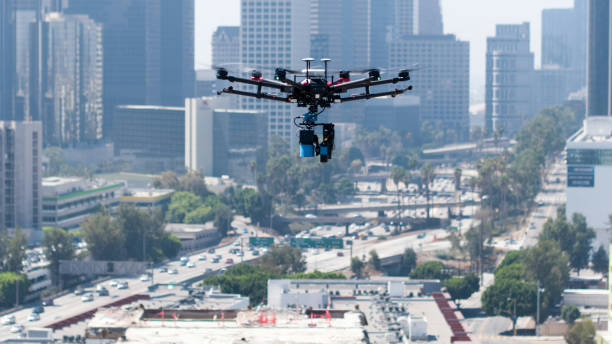
The future of autonomous drone technology is expected to significantly impact transportation, infrastructure, logistics, and public services. In smart cities, autonomous drones may support real-time traffic monitoring, environmental data collection, infrastructure inspection, and emergency response coordination. Drone-based delivery systems could become standard in logistics, enabling rapid, contactless transport of goods across urban and remote areas.
However, the proliferation of autonomous drones also introduces challenges related to airspace management, privacy, cybersecurity, and ethical use particularly as surveillance and data collection capabilities expand. Public trust and societal acceptance will depend on transparent governance and responsible deployment.
Regulatory frameworks are currently evolving to address these concerns, aiming to balance innovation with operational safety, accountability, and legal compliance. While continued advancements in AI, autonomy, and battery systems will accelerate development, the exact trajectory of adoption will depend on technological maturity, economic viability, and policy alignment at national and global levels.
The role of Duckietown in autonomous drone technology
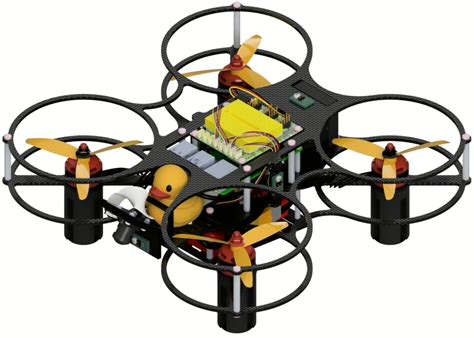
Duckietown, through its Duckiedrone platform, aims to make autonomous drone technology accessible for education and research. Designed for modularity and ease of use, the Duckiedrone serves as a practical entry point for learners to study the core components of autonomy including perception, control, and AI integration using real hardware and open-source tools.
For educators, the platform provides a structured and scalable educational drone platform to teach robotics, computer vision, and autonomous systems in both physical and simulated environments. Its hands-on approach bridges theoretical learning and real-world implementation.
By lowering technical and financial barriers, Duckietown democratizes access to drone autonomy, allowing students, researchers, and hobbyists to engage with the same principles used in industrial applications such as smart infrastructure, logistics, and aerial surveillance. The open design encourages experimentation and extension, supporting both foundational learning and advanced prototyping.
Learn more about Duckietown
The Duckietown platform enables state-of-the-art robotics and AI learning experiences.
It is designed to help teach, learn, and do research: from exploring the fundamentals of computer science and automation to pushing the boundaries of human knowledge.