Vikram PoD + logo autnomous driving

Teaching robot autonomy at The Hague University

Teaching robot autonomy at The Hague University

Lecturer Vikram Radhakrishnan shares how he is teaching robot autonomy at The Hague University through hands-on robotics, computer vision, SLAM, and real-world student projects.

The Hague University of Applied Sciences, The Netherlands, May 2026: Vikram Radhakrishnan is a Lecturer in the Applied Data Science & AI program at The Hague University of Applied Sciences, where he developed a specialization in self-driving vehicles using Duckietown as the primary educational platform.

In this interview, he shares how the course came to life, how students approach robot autonomy and autonomous driving, and what he has learned from introducing hands-on robotics into an applied AI curriculum.

Teaching robot autonomy with Duckietown

Hi, thank you for sharing your time with us! Could you introduce yourself?

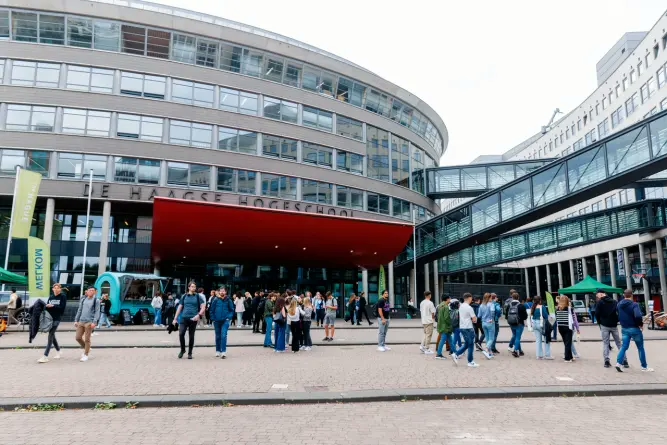
My name is Vikram Radhakrishnan, and I am a Lecturer at The Hague University of Applied Sciences, where I teach in the Applied Data Science & AI program. It’s a relatively new four-year undergraduate program, and this year we’re graduating our first cohort of students.

In the third year, students can choose to specialize either in Generative AI or in Self-Driving Vehicles, which is the specialization I developed.

THUAS autonomous driving 2026 2
Could you tell us more about this program?
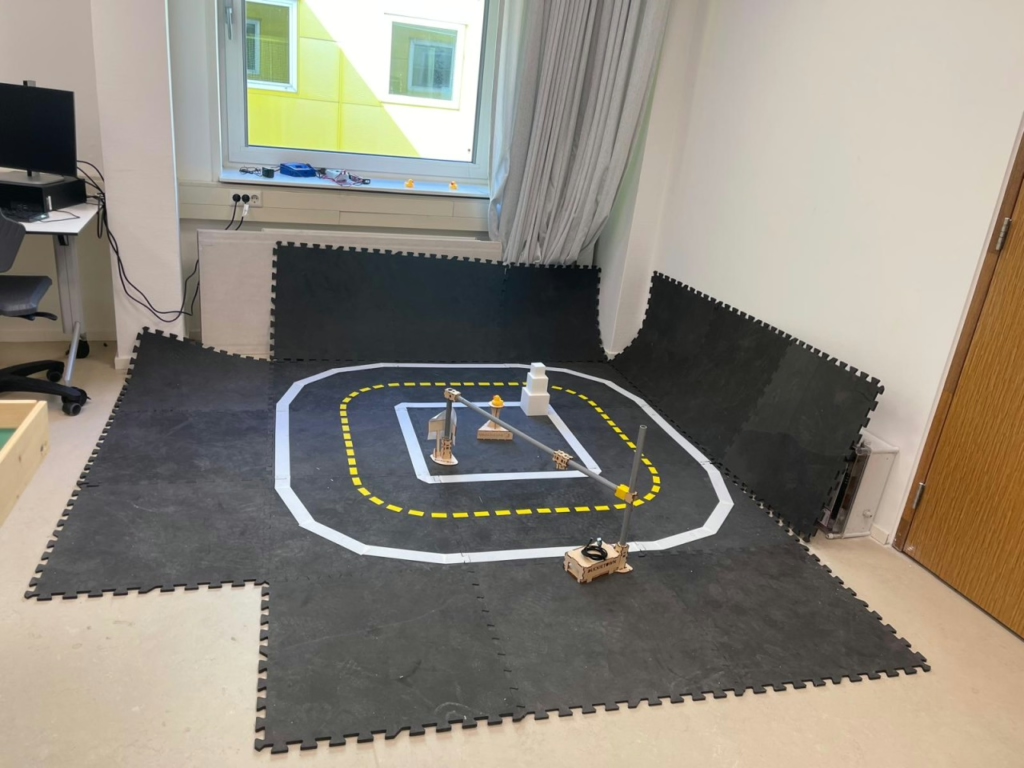
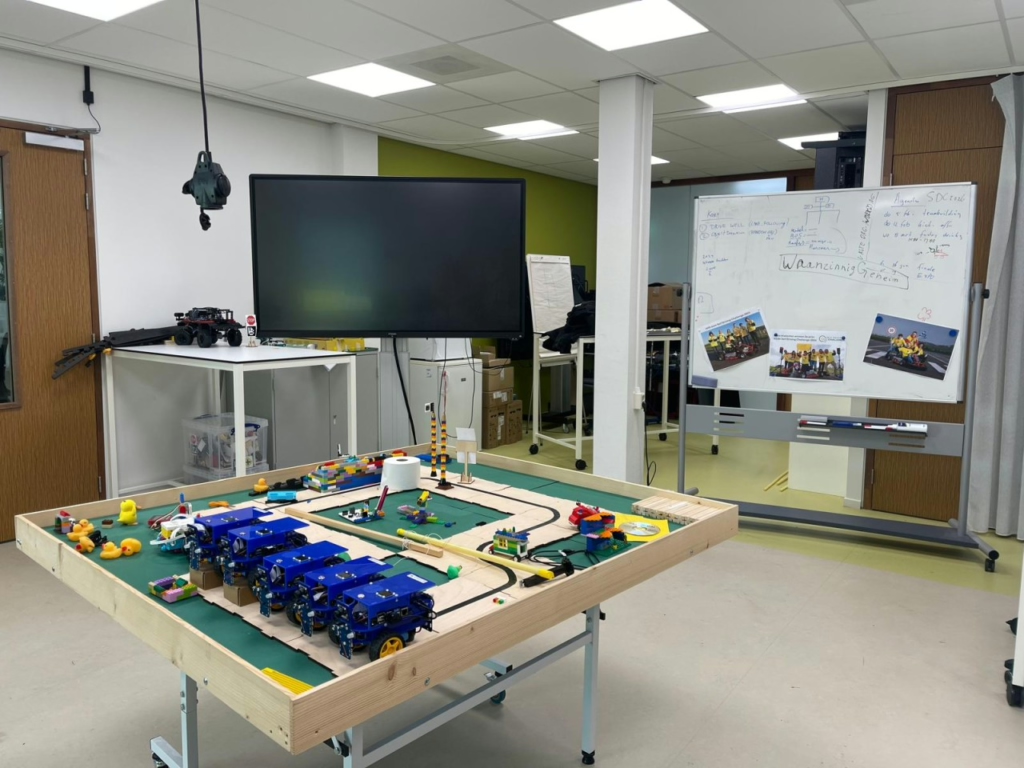
Educational robotics lab with a large build table of LEGO-like vehicles and a track, a monitor on the wall, and a whiteboard in the background.

The course is designed to introduce students to the main building blocks of autonomous driving. We begin with computer vision and image processing, covering topics such as lane following and object detection.

From there we move on to localization techniques, including Simultaneous Localization and Mapping (SLAM), before finishing with navigation, control, and path planning.

The goal is to expose students to the complete autonomous driving pipeline through practical, hands-on exercises.

What kind of projects do students complete during the course?

The course contains three major projects.

The first project focuses on lane following combined with object detection, giving students practical experience with computer vision.

The second project is considerably more advanced. Students learn concepts such as Extended Kalman Filter localization and monocular SLAM, including ORB-SLAM3, before selecting an approach to map their environment while driving through the Duckietown.

The final project combines everything they have learned. Students navigate autonomously from one point to another while simultaneously building a map of the environment.

Throughout the course I ask students to record videos of their work and share them with the class, which has been a great way to document their progress.

Students enjoy working with real robots, the practical nature of the course keeps them engaged because they can immediately see the results of what they implement.

How are students responding to the course?

They enjoy working with real robots.

The practical nature of the course keeps them engaged because they can immediately see the results of what they implement.

The biggest challenge isn’t motivation but complexity. Some topics, particularly localization and SLAM, involve mathematics that can be demanding for students at a university of applied sciences.

I usually focus on giving them a strong conceptual understanding while allowing them to work with existing implementations rather than diving deeply into every mathematical derivation.

Why did you choose Duckietown?

Before developing the course, I looked for a platform that could provide both the hardware and the software needed to teach autonomous driving effectively.

I saw that Duckietown was already being used by multiple universities and research institutes, and what immediately stood out was the amount of educational material that was already available. Having an integrated platform with existing learning experiences made it a very attractive choice.

Initially we purchased three Duckiebots because this was an elective course and we didn’t know how many students would enroll.

Eventually eighteen students signed up, so we rented three additional robots. Today we have six purchased Duckiebots together with three rental units, which allows students to work directly with the hardware.

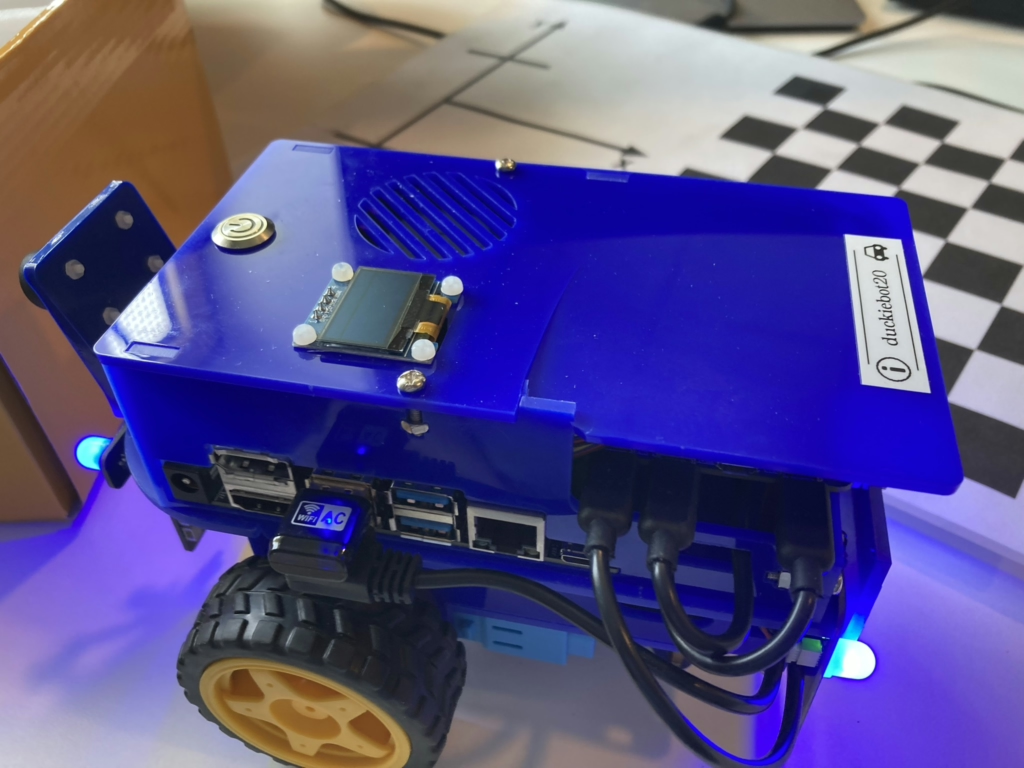
Duckiebot with exposed electronics and large tan wheels, labeled duckiebot, connected by cables under blue lighting
You were among the first instructors to use the Duckiebot rental program. How was your experience?
Duckietown autonomous driving AI lab NL 1

Overall it has been a positive experience.

We had some delays at the beginning due to shipping and customs, so it took a little longer before the rental robots reached us. Once they arrived, though, having additional robots made a significant difference because all eighteen students needed access to physical hardware.

Looking ahead, we would probably purchase additional robots instead of renting simply because it simplifies logistics.

What do you see as the strengths of Duckietown and what were the challenges you encountered?

The biggest advantage is the complete ecosystem.

The hardware, software stack, documentation and educational materials are all available, allowing instructors to build a course without starting from scratch.

For example, the existing lane-following implementation provides an excellent foundation that students can immediately experiment with and extend.

Regarding the challenges, Duckietown provides excellent learning experiences that explain individual components, whether that is ROS, object detection or another topic. However, understanding how all those individual pieces fit together into one complete autonomous system takes time.

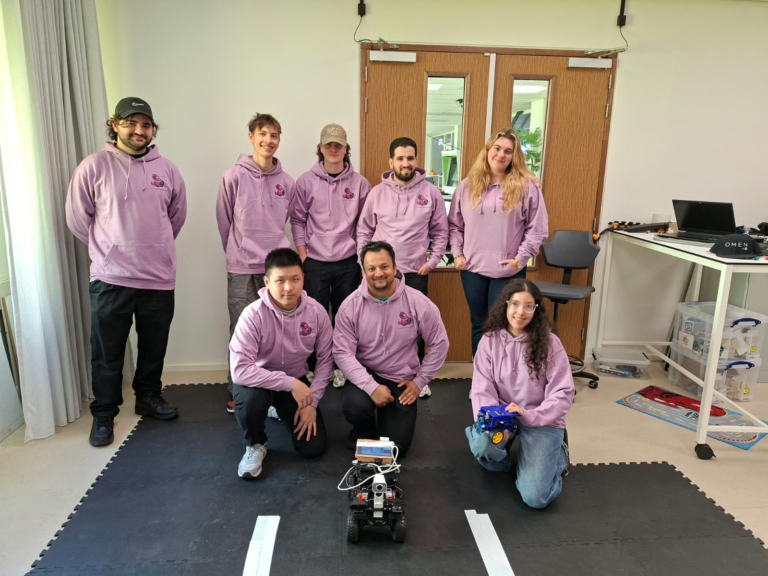
Team DUI autonomous driving front

Even for instructors, there is a significant learning curve before the overall architecture becomes clear.

I also found that some tutorials and template repositories differ slightly in their structure, which can be confusing for students when they begin developing their own ROS nodes.

Also, most students use Windows laptops, and we initially tried to use development containers, but we weren’t able to get that workflow running reliably. In the end, we asked students to install Linux as a dual-boot.

Making the development environment easier to access across operating systems would certainly lower the barrier for new users.

Your students also participate in the Self-Driving Challenge. Is that part of the course?

The competition is actually separate from the course itself.

Our university has participated in the Self-Driving Challenge for several years, and this year the event has become international, with teams from multiple countries taking part.

I think there’s a great opportunity for closer collaboration between the competition, universities teaching autonomous driving, and Duckietown itself.

We’re all working toward the same objective of helping students learn robot autonomy through hands-on experience.

Finally, would you recommend Duckietown to other instructors?

Absolutely.

If you’re looking for a practical platform to teach autonomous driving, Duckietown provides a complete educational ecosystem. Students don’t just learn isolated algorithms; they see how perception, localization, planning and control all come together on a real autonomous robot.

That combination of theory and hands-on implementation is what makes the learning experience so valuable.

Vikram Radhakrishnan The Hague University of Applied Sciences autonomous driving 2

Learn more about Duckietown

Duckietown enables state-of-the-art robotics and AI learning experiences.

It is designed to help teach, learn, and do research: from exploring the fundamentals of computer science and automation to pushing the boundaries of human knowledge.

Tell us your story

Are you an instructor, learner, researcher or professional with a Duckietown story to tell?

Reach out to us!

Rome Cup 2026 Jacopo Tani 4 - robotics and innovation

Rome Cup 2026

Rome Cup 2026

Learn more about the Rome Cup 2026, organized since 2007 by the Fondazione Mondo Digitale in Rome. Dedicated to students, businesses and institutions.

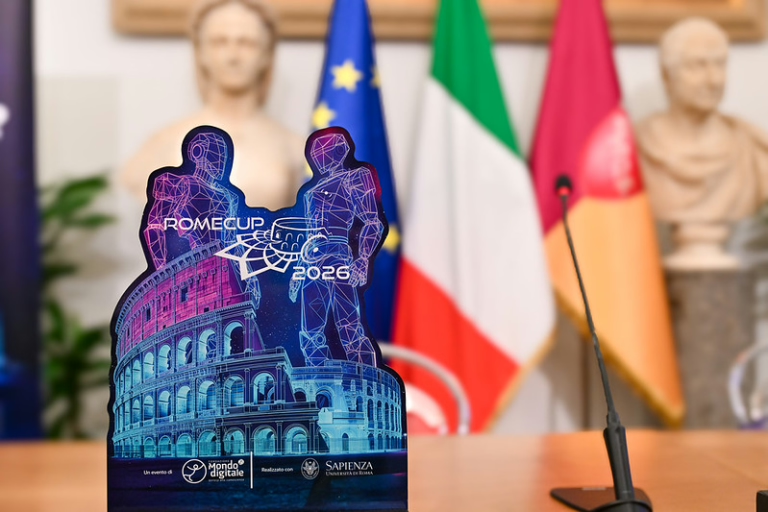
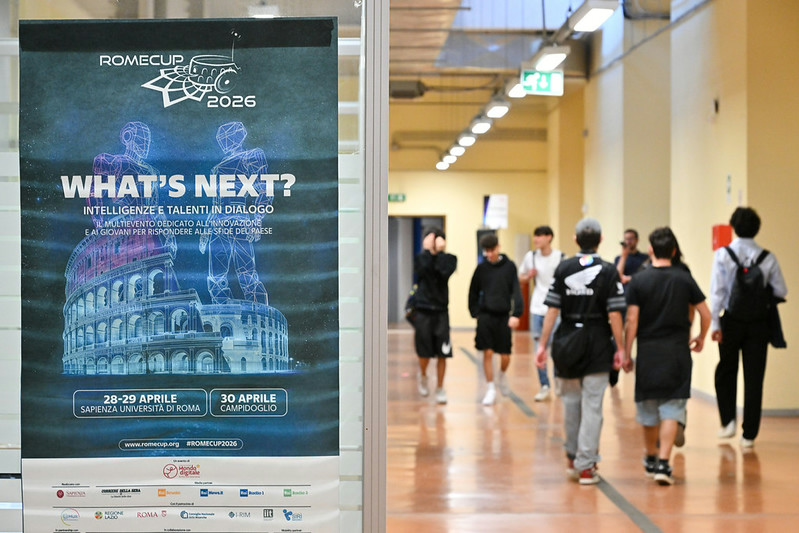
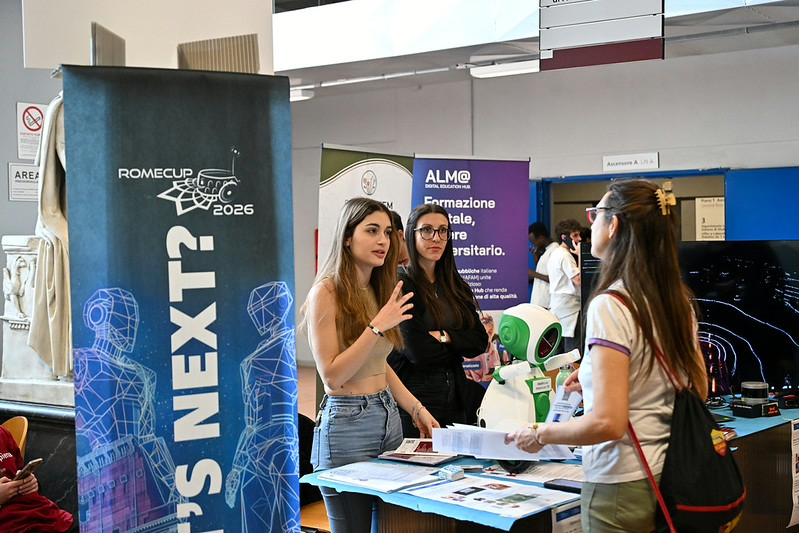
Rome, 28th April 2026 – Over 4000 students took part in the 19th edition of the Rome Cup 2026 entitled “What’s Next? – Intelligence and talent in dialogue, converging technologies and shared governance” was held in Rome from 28-30 April and organized by Fondazione Mondo Digitale in collaboration with the University of Rome “La Sapienza”. 

Rome Cup 2026

The Rome Cup 2026 is a multi day event dedicated to robotics and
innovation across three key areas – robotics, artificial intelligence
and life sciences – and with a strategic vision: focusing on the younger generations. 

Organized by Fondazione Mondo Digitale and the University of Rome “La Sapienza”, the event brings together schools, universities, research centers and companies to discuss about robotics, artificial intelligence and emerging technologies.

Now in its 19th year, the initiative features conferences, robotics competitions, workshops and career guidance sessions, with the aim of nurturing talent and skills to build a sustainable and inclusive future.

Rome Cup 2026 7

Since 2007, Rome Cup has been encouraging the younger generation to
study scientific subjects and developing skills and professional
profiles for the job market. Each edition introduces new “themes” (women
in science, robotics spin-offs, Industry 4.0, life sciences, etc.) to
forge connections and enrich the innovation ecosystem through
vertical and cross-sector partnerships.

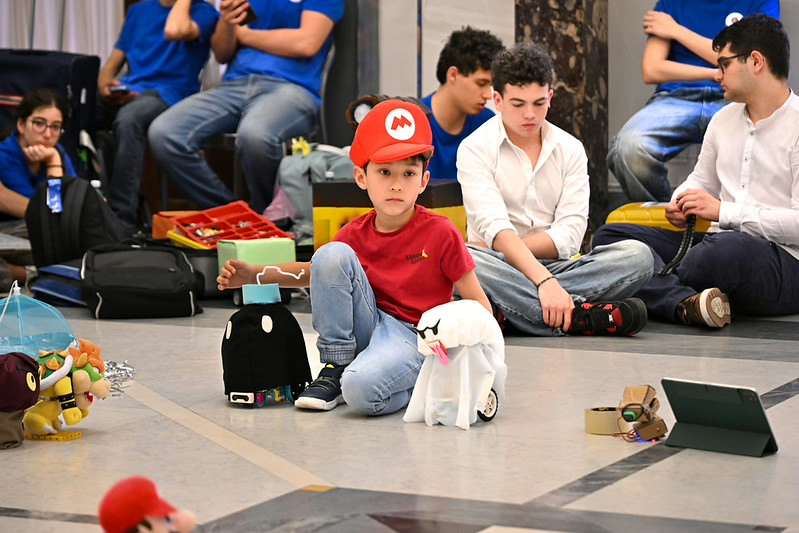
The event saw the participation of over 4000 students, involving 100 teams in the robotics competitions, 32 teams in creative contests, 11 universities, 17 university careers talks and an exhibition area featuring prototypes from 53 organizations.

The central theme of this edition was augmented intelligence as a paradigm for human-centered, inclusive and sustainable development of technological innovation and its application ecosystems.

Rome cup 2026 20
Rome Cup 2026 12 Super Mario jr
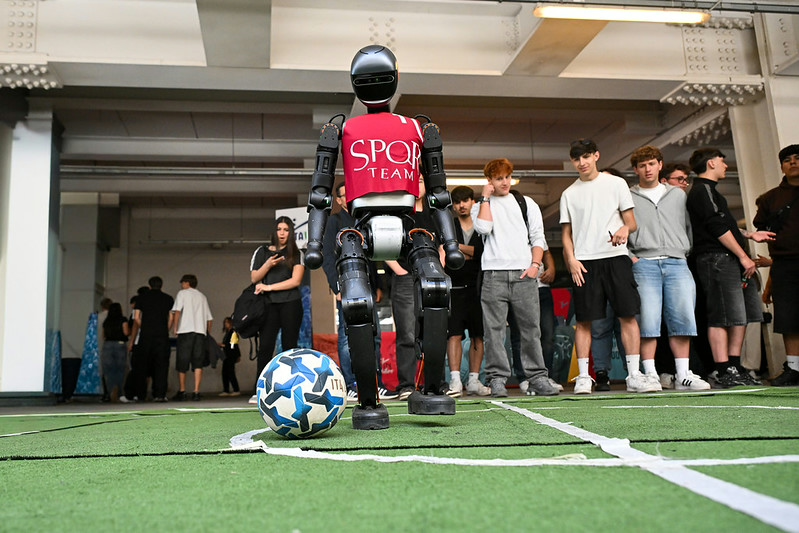
Rome Cup 2026 15 robosoccer
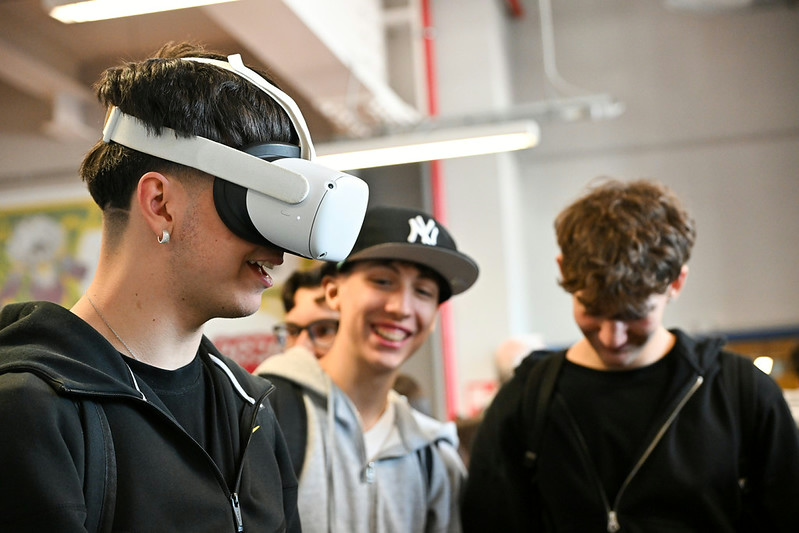
Person wearing a white VR headset in a group setting, with two friends watching. Rome cup 2026
Rome Cup 2026 16
Rome Cup 2026 1 - robotics and innovation

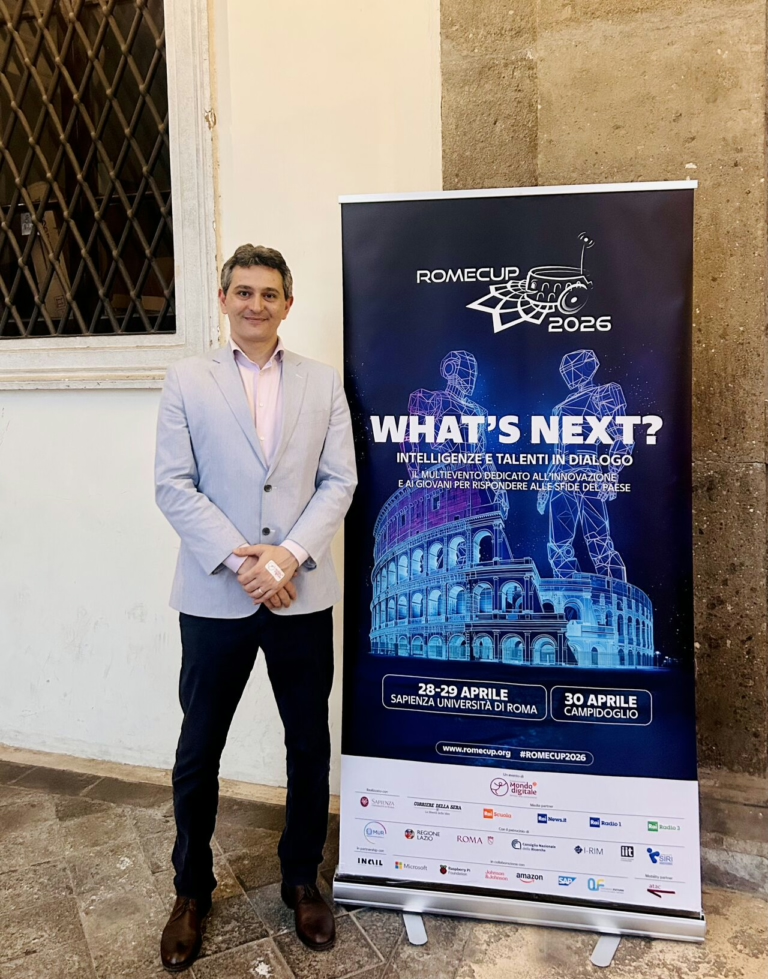
Duckietown at the Rome Cup 2026

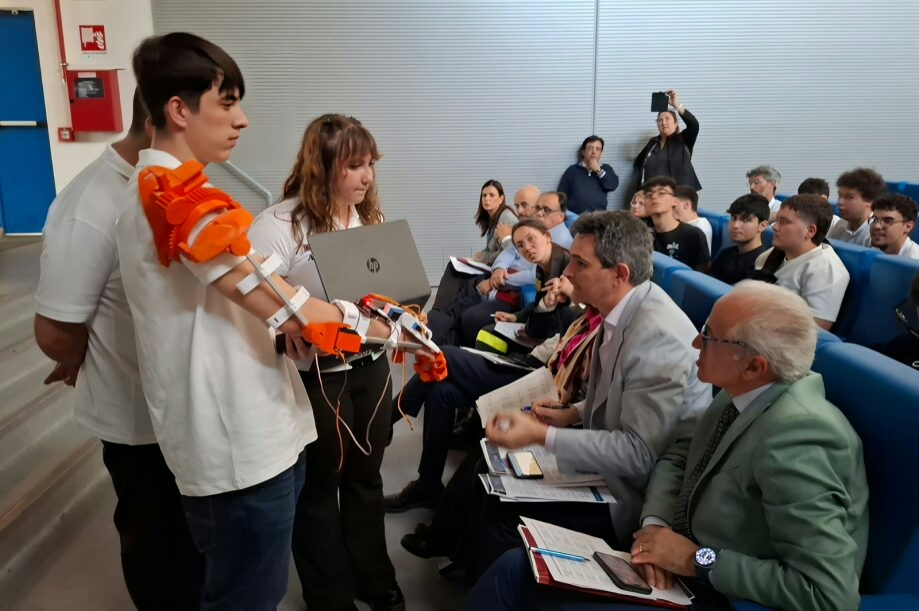
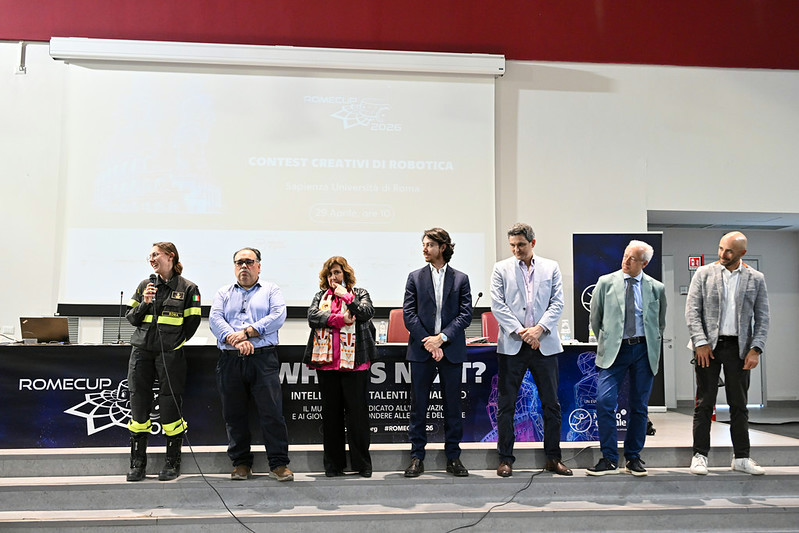
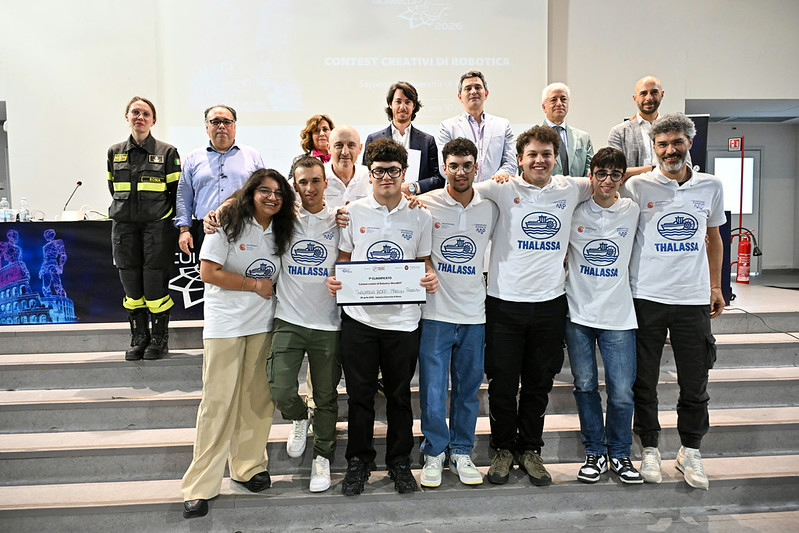
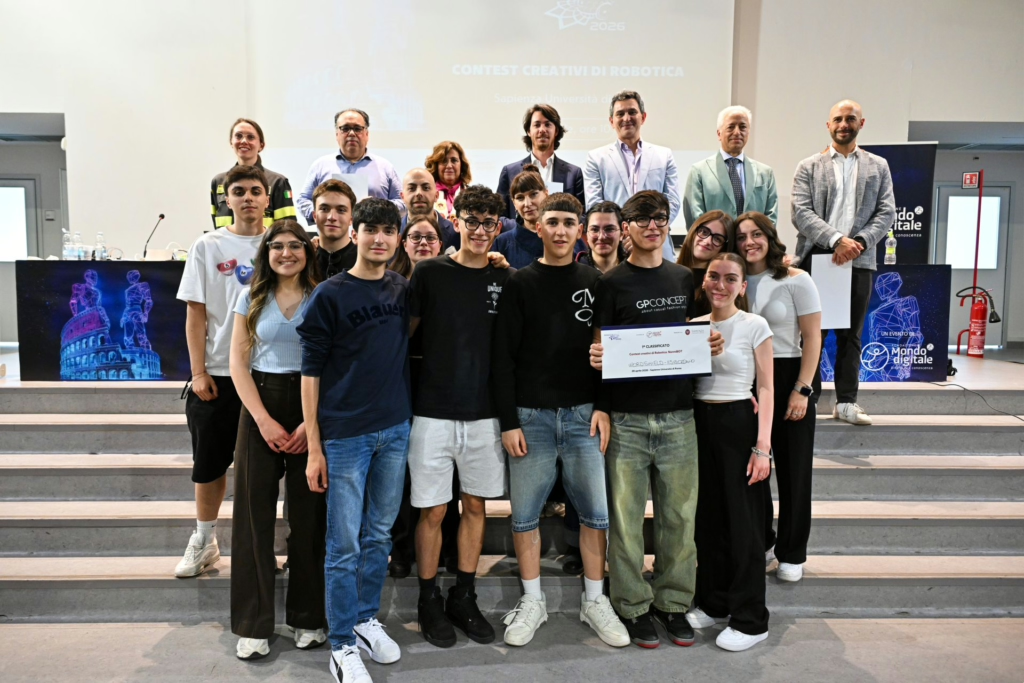
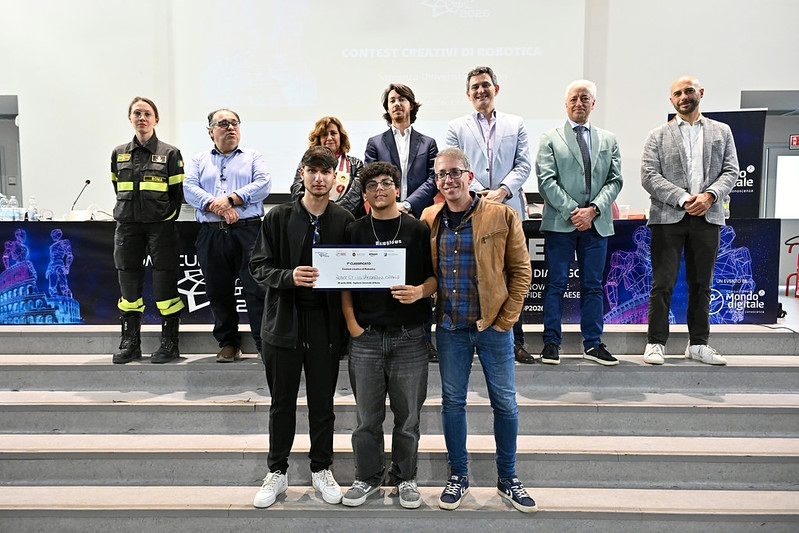
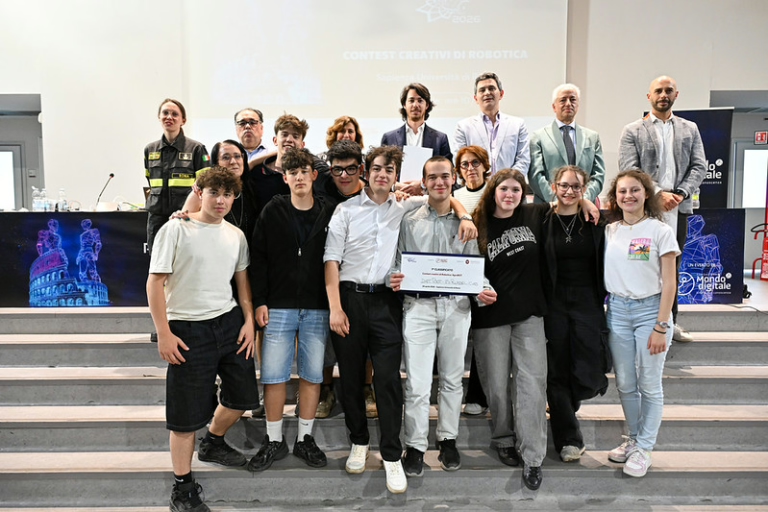
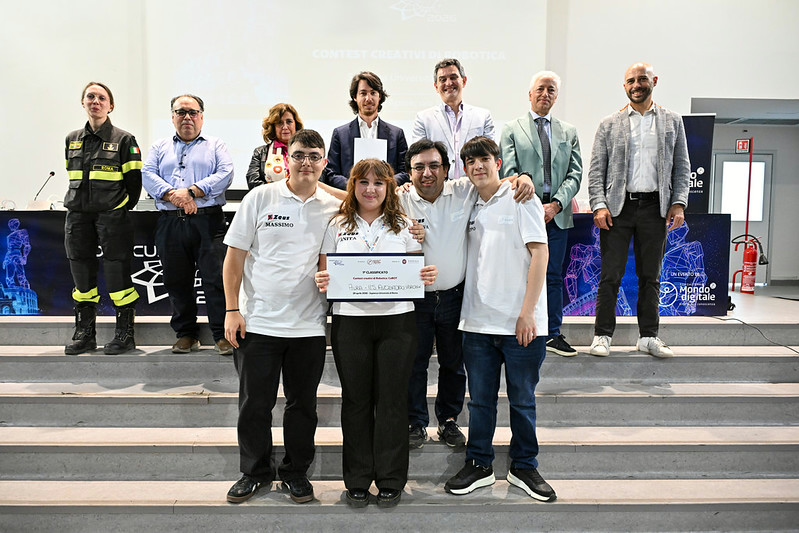
Duckietown, represented by Jacopo Tani, Ph.D., was part of a panel of judges tasked with assigning an award to the best project participating in the robotics creative contest. The “20°Trofeo Internazionale di robotica CittĂ  di Roma [20th International Robotics Trophy, City of Rome]” (Rescue Line, Explorer Junior, Explorer Senior, Robotic arms) took place as well.

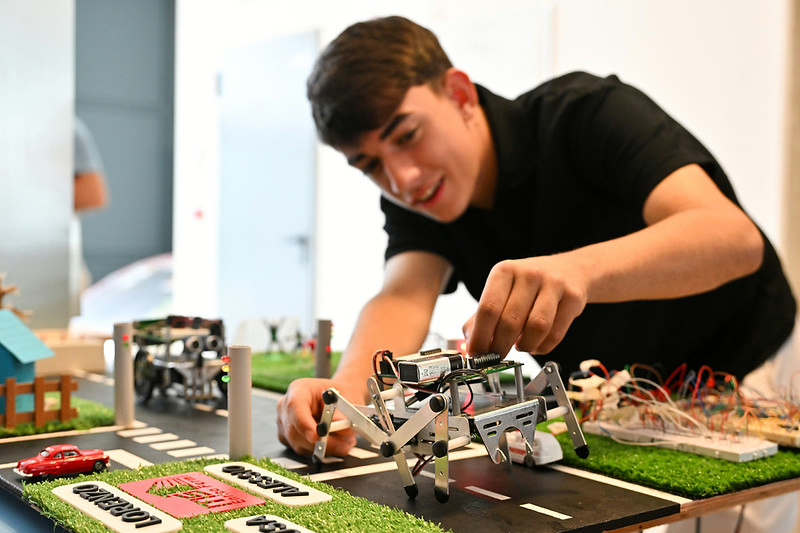
Prototype robotic applications were presented (assistance,
agriculture, etc.) in various categories: AgroBOT, CoBOT, DroneBOT,
MareBOT, NonniBOT, TirBOT, and this year also a HealthBOT category. 

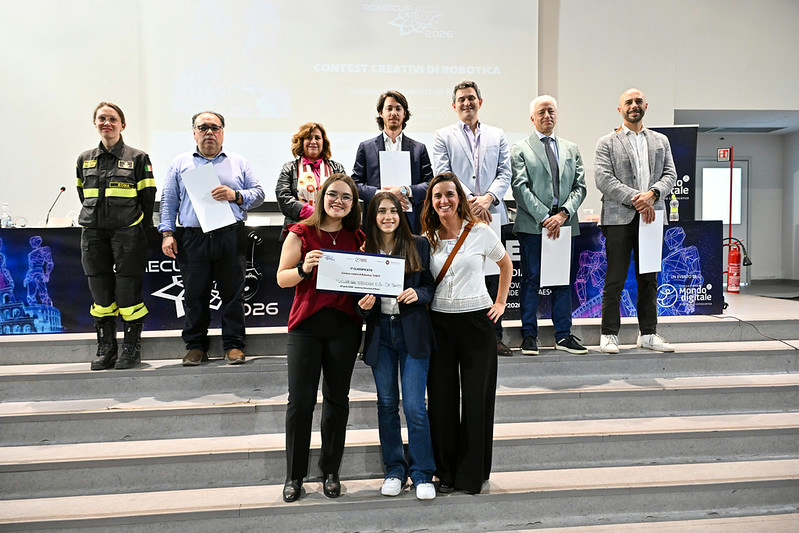
Following a brief presentation session, the jury composed by Ezia Palmeri, senior official at the Ministry of Education and Merit; Fabrizio Corradi, psychotechnologist and expert in assistive technologies, augmentative and alternative communication, and artificial intelligence at LUMSA and the Leonarda Vaccari Institute; Alessia Lo Bosco, Director of Vocational Training Services for the Metropolitan City of Rome; Massimiliano Dibitonto, Head of Product and Services Guidelines at Olivetti and Jacopo Tani, co-founder, Chairman and Chief Executive Officer (CEO) of Duckietown.


The winning teams from the 2026 edition:

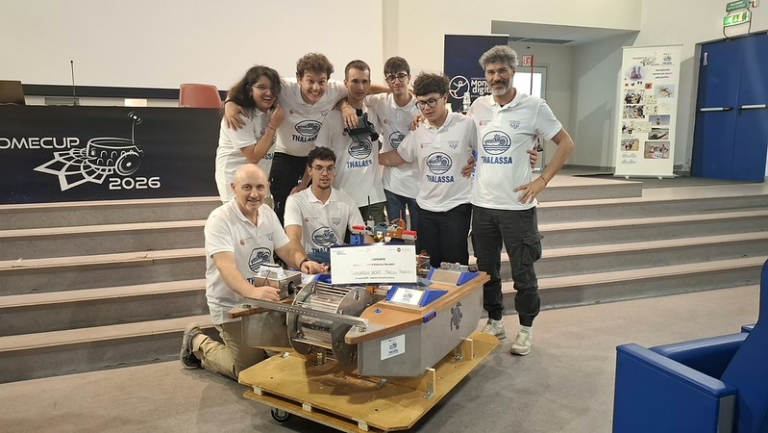
MAREBOT – Thalassa Boat, IIS Marconi Pieralisi
TIRBOT – Road Safety and AI, IIS De Santis
NONNIBOT – Word Shield, IIS Giordano
AGROBOT – Diet Bot, IIS Russell (Cles)
COBOT – Aura, IIS Avogadro
RobotCT – IIS Vaccarini (Catani
Rome Cup Jacopo Tani - robotics and innovation
Rome Cup 2026 creative contest 6
Rome Cup 2026 creative contest 3
Rome Cup 2026 creative contest 2
Rome Cup 2026 creative contest 1
Rome Cup awards 2026 - robotics and innovation
Rome Cup 2026 creative contest 4
Rome Cup 2026 creative contest 7

Photo credits: Francesco Vignali

Learn more about Duckietown

Duckietown is a set of tools that enables hands-on robotics and AI learning experiences.

It is designed to help teach, learn, and do research: from exploring the fundamentals of computer science and automation to pushing the boundaries of human knowledge.