Autonomous Navigation and Parking in Duckietown
Project Resources
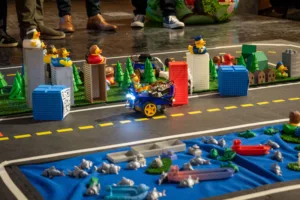
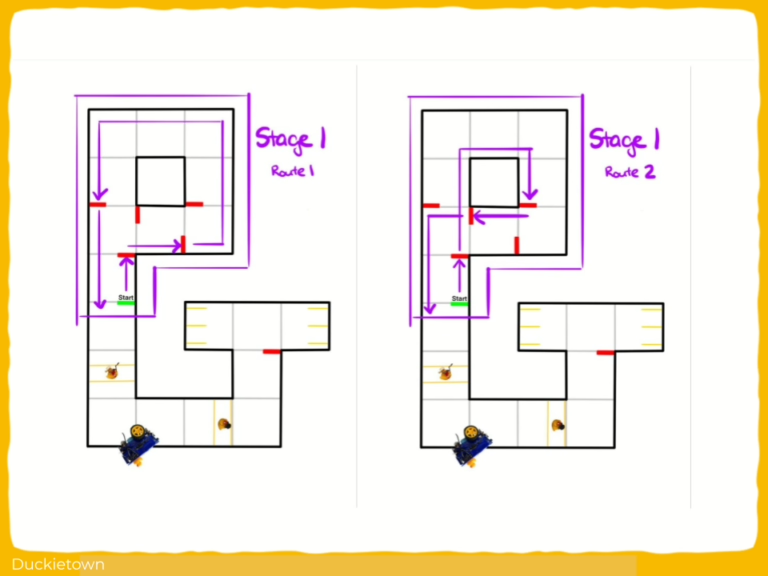
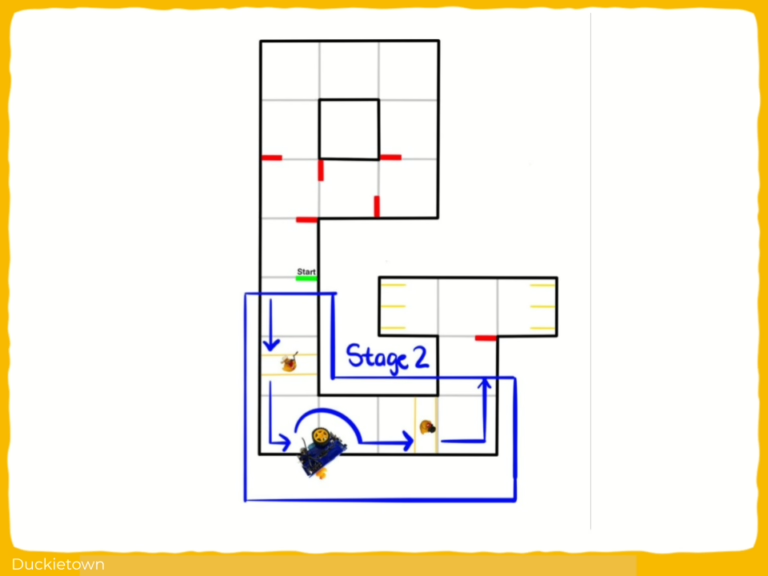
- Objective: Achieve autonomous navigation and parking in an intersection-equipped Duckietown city.
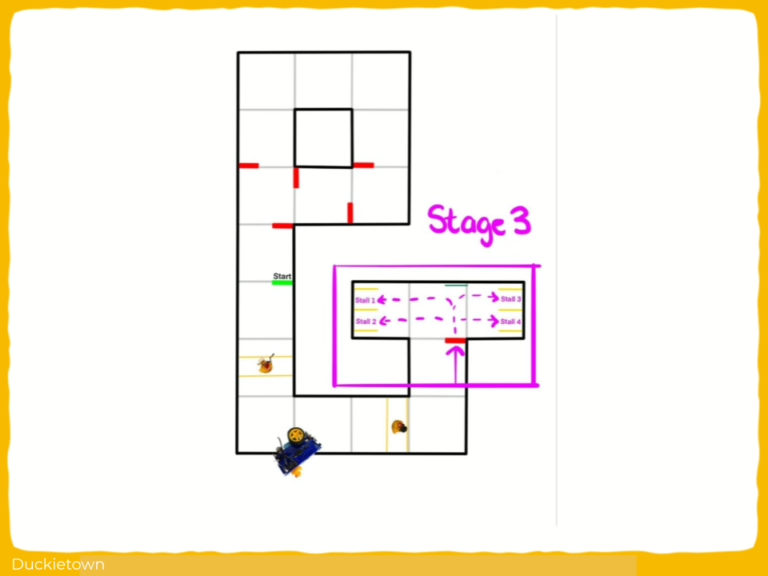
- Approach: Utilizing an FSM to transition between PID control-based lane following, intersection navigation, and parking using visual fiducial markers (AprilTags), color masking, and dead reckoning.
- Authors: Eric Khumbata, Cameron Hildebrandt, Jasper Eng from the University of Alberta.
- Course: This project is part of the CMPUT 412 Experimental Mobile Robotics course at the University of Alberta under Prof. Matthew E. Taylor.
Project highlights
Static parameters in a dynamic environment are pre-programmed failure points.


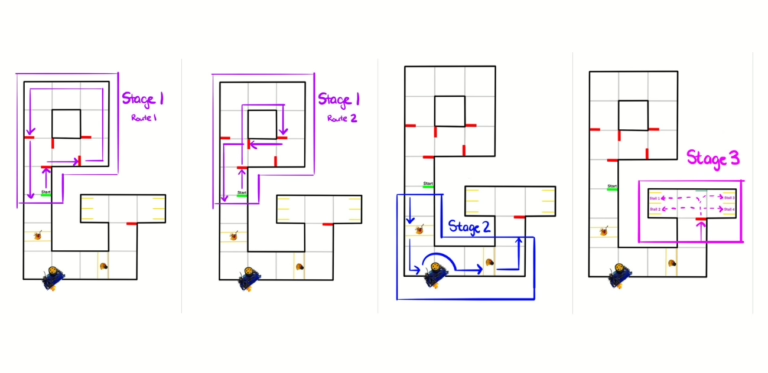
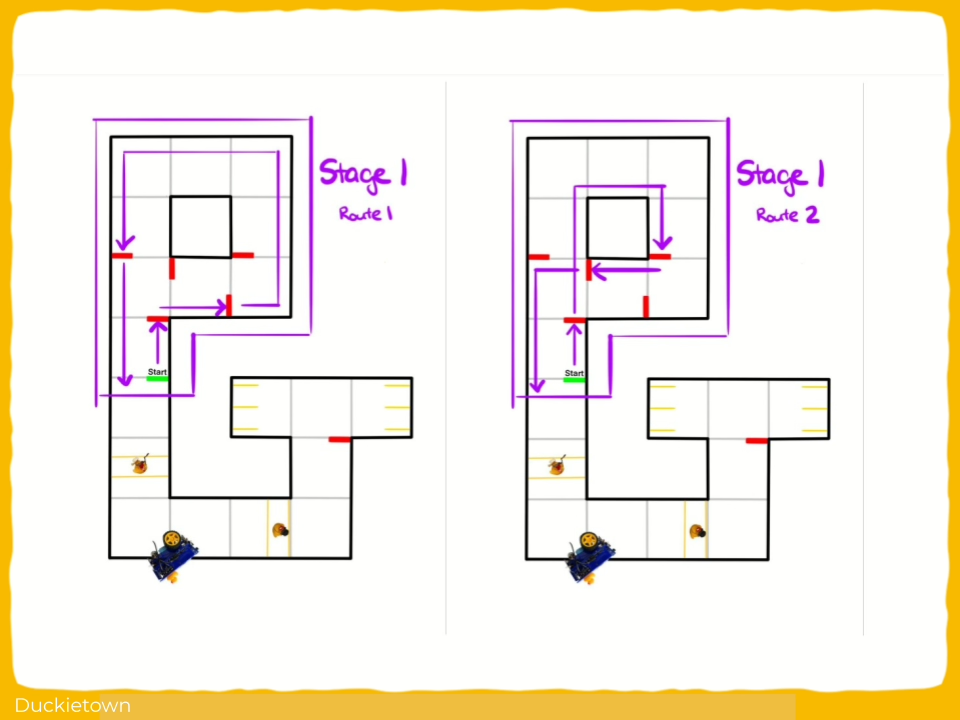
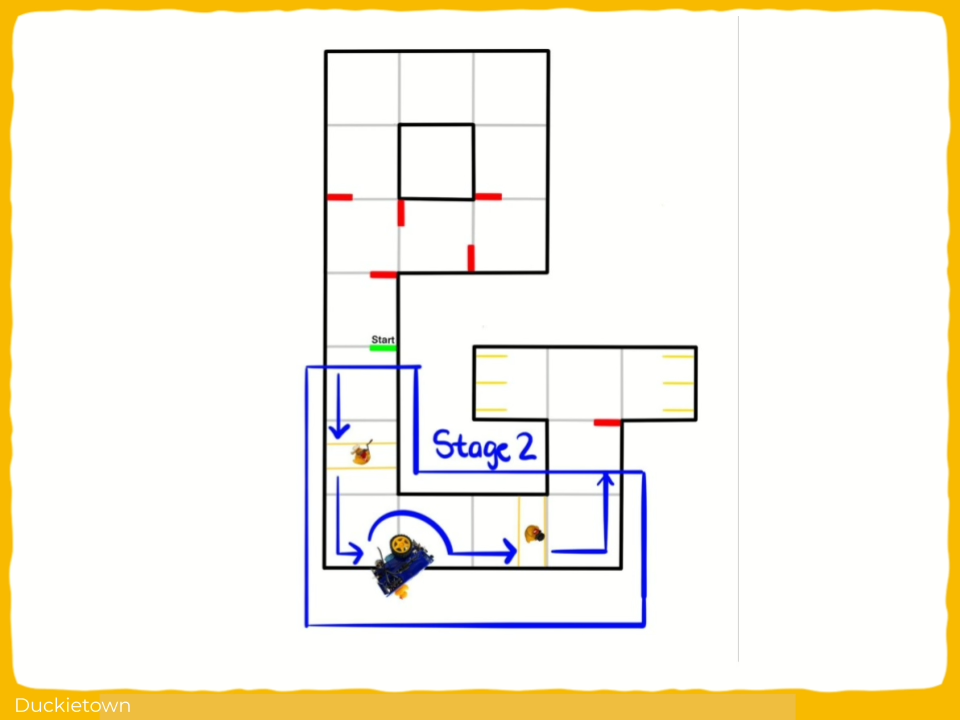
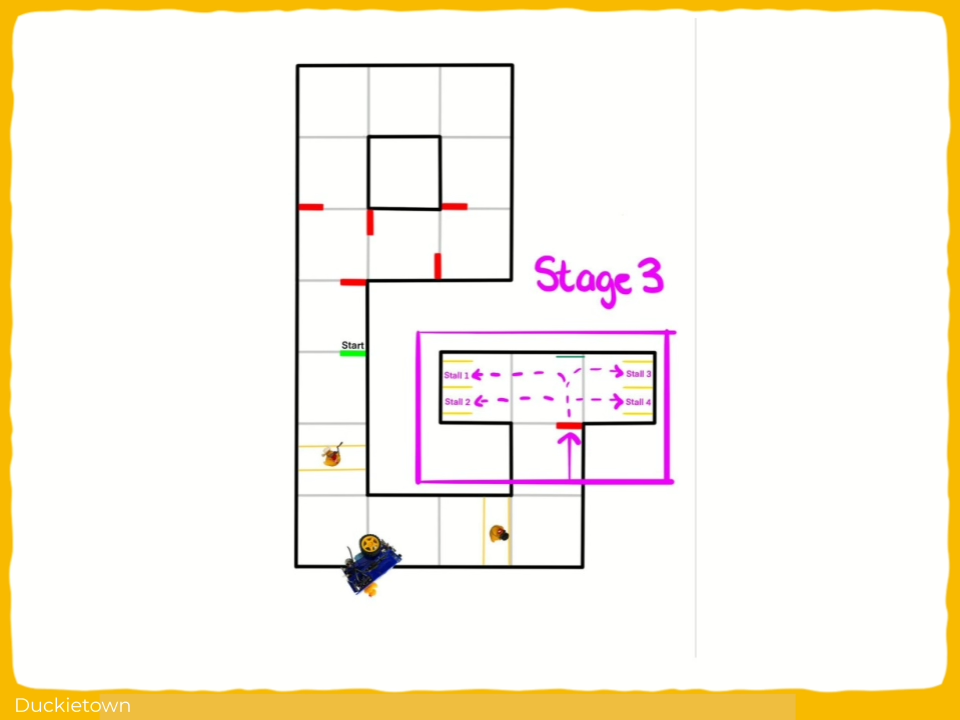
Autonomous Navigation and Parking in Duckietown: the objectives
The system uses wheel encoder data for dead-reckoning-based motion execution in the absence of visual cues, and applies HSV-based color segmentation to detect and respond to static and dynamic obstacles. Visual servoing is used for parking alignment based on AprilTag localization. The control logic is modular and supports parameter tuning for hardware variability, with temporal filtering to suppress redundant detections and ensure stability.
The challenges and approach
The key technical issues included inconsistent AprilTag detection due to motion blur and multiple redundant detections, which were mitigated using temporal filtering. PID control was used for continuous lane following, with dead reckoning based on wheel encoder data for intersection traversal when visual input was unreliable.
Obstacle detection and stopping mechanisms used HSV-based color segmentation to identify static and dynamic objects in the environment. In the parking stage, AprilTag-based localization and visual servoing were used to achieve stall alignment. The system was modular, with state-driven control logic managing transitions between lane following, intersection handling, obstacle detection, and parking.
Did this work spark your curiosity?
Check out the following works on path planning with Duckietown:
Autonomous Navigation and Parking in Duckietown: Authors
Eric Khumbata is working as a Computer Engineer at TELUS, a Canadian telecommunications company.
Jasper Eng is currently working as a Summer Research Intern at the BLINC Lab.
Cameron Hildebrandt is currently working as a Fullstack Developer at Bitcoin Well, Canada.
Learn more
Duckietown is a capable, affordable, and reliable platform for creating and disseminating robotics and AI learning experiences.
Duckietown is designed to teach, learn, and do research: from exploring the fundamentals of computer science and automation to pushing the boundaries of knowledge.
These spotlight projects are shared to exemplify Duckietown’s value for hands-on learning in robotics and AI, enabling students to apply theoretical concepts to practical challenges in autonomous robotics, boosting competence and job prospects.