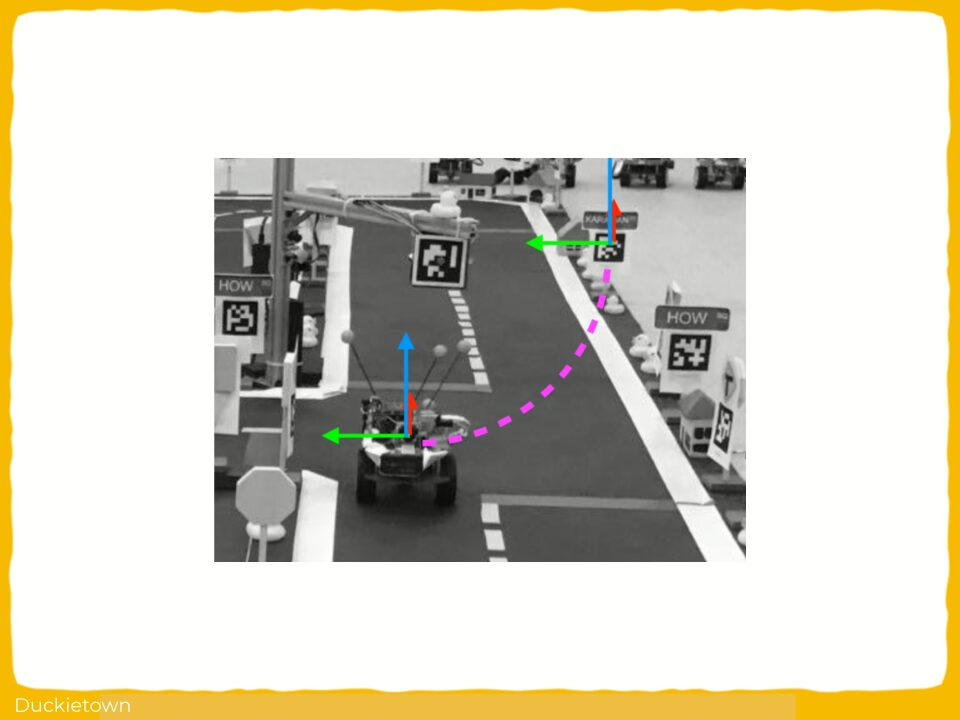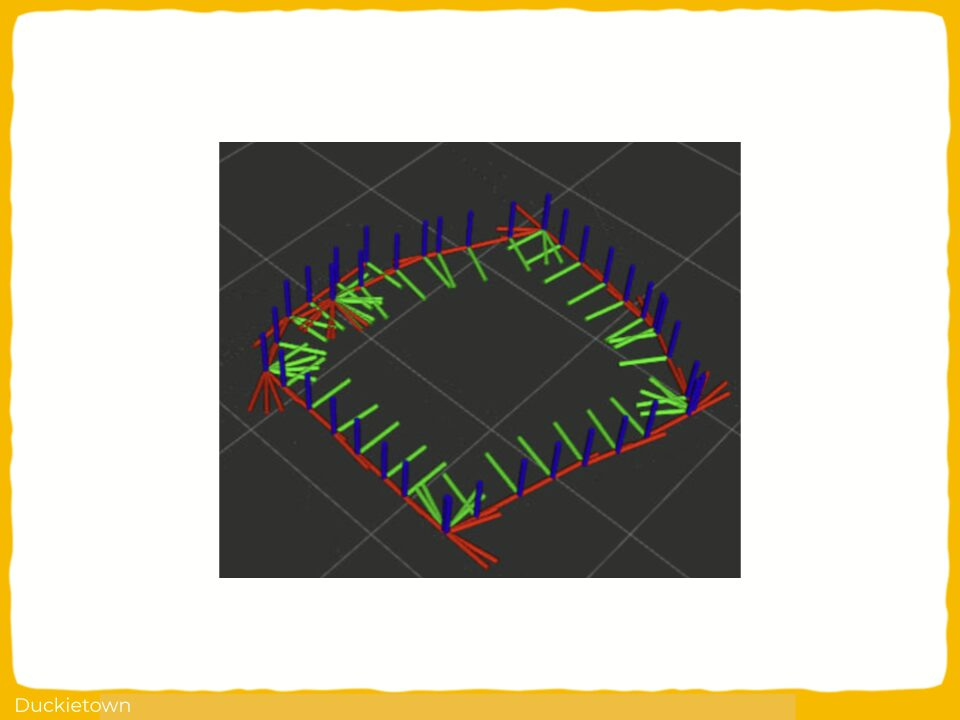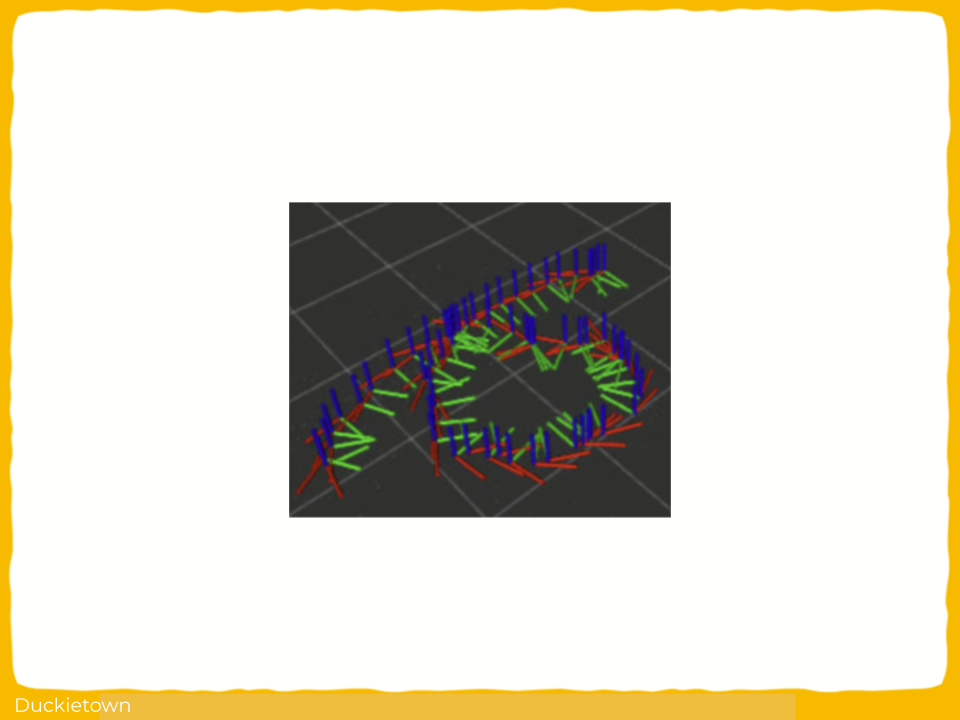
Duckietown Map Coordinate System for Global Localization

Duckiebot Localization with Sensor Fusion in Duckietown

Duckiebot Localization with Sensor Fusion in Duckietown

Project Resources

Localization with Sensor Fusion in Duckietown - the objectives

The advantage of having multiple sensors on a Duckiebot is that the data provided can be combined to provide additional precision and reduce uncertainty in derived results. This process is generally referred to as sensor fusion, and a typical example is localization, i.e., the problem of finding the pose of the Duckiebot in time, with respect to some reference frame. And if the data is redundant? No problem, just discard it.

In this project, the objective is to implement sensor fusion-based localization and lane-following on a DB21 Duckiebot, integrating odometry (using data from wheel encoders) with visual AprilTag detection for improved positional accuracy. 

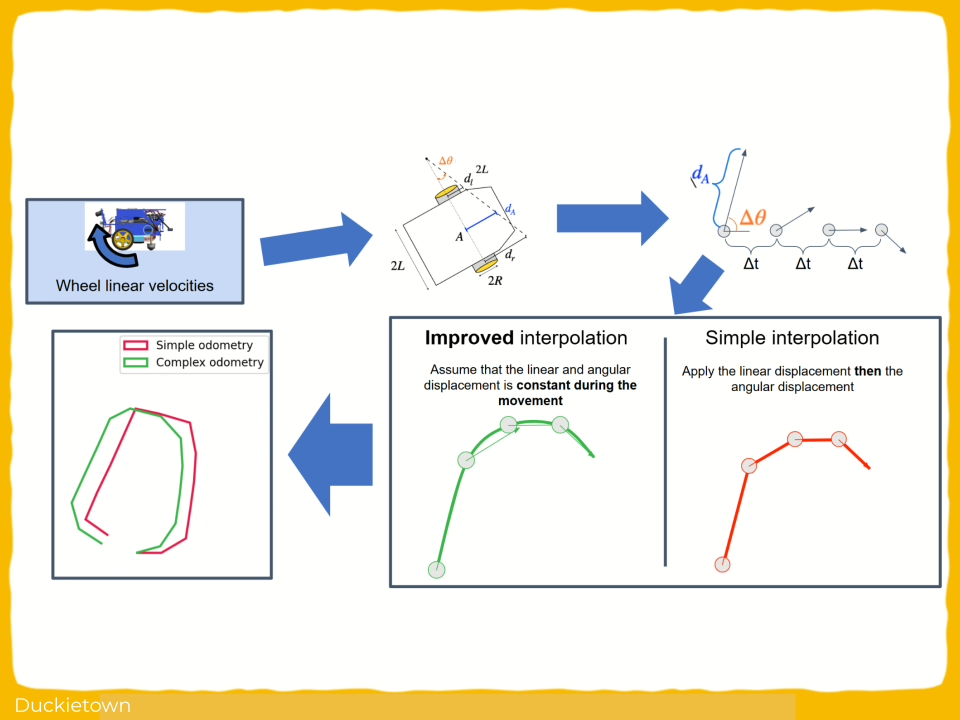
This process addresses limitations of odometry, i.e., the open-loop reconstruction of the robots’ trajectory using only wheel encoder data in a mathematical approach known as “dead reckoning”, by incorporating AprilTags as global reference landmarks, thereby enhancing spatial awareness in environments where dead reckoning alone is insufficient.

Technical concepts include AprilTag-based localization, PID control for lane following, transform tree management in ROS (tf2), and coordinate frame transformations for pose estimation.

Sensor fusion - visual project highlights

The technical approach and challenges

This approach, at the technical level, involves:

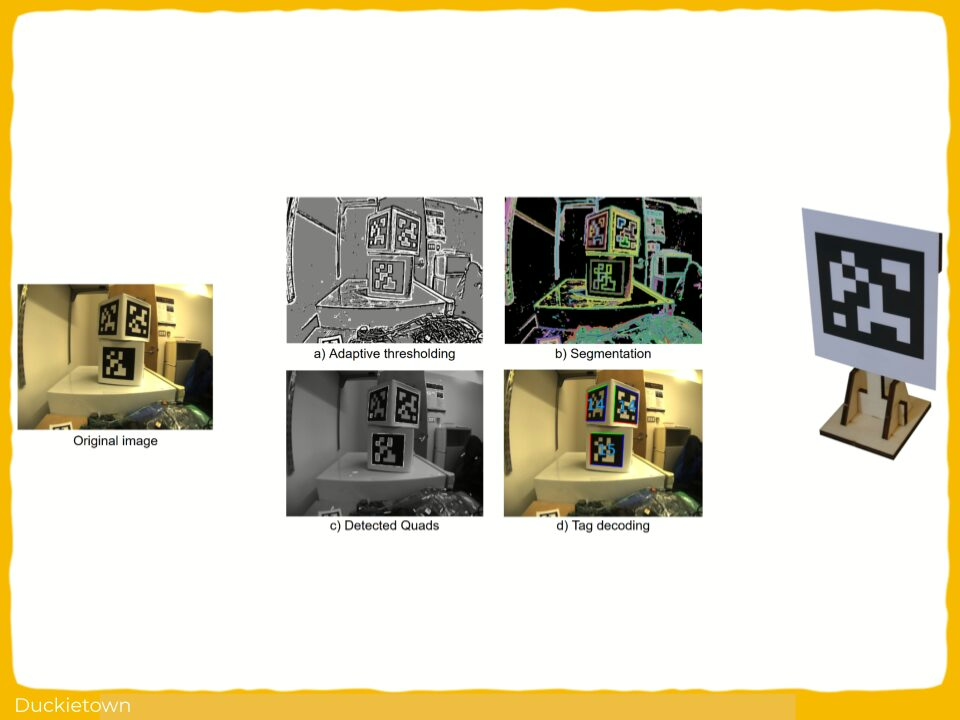
  • extending ROS-based packages to implement AprilTag detection using the dt-apriltags library,
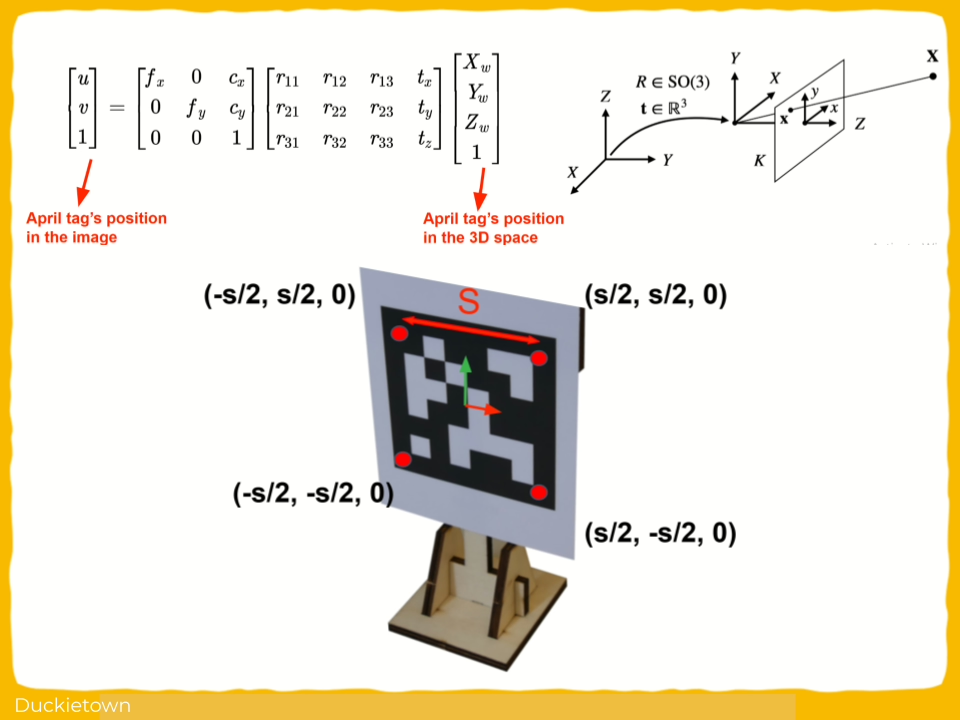
  • configuring static transformations for landmark localization in a unified world frame, and
  • correcting odometry drift by broadcasting transforms from estimated AprilTag poses to the Duckiebot’s base frame.

A full PID controller was moreover implemented, with tunable gains for lateral and heading deviation, and derivative terms were conditionally initialized for stability.

Challenges included:

  • remapping ROS topics for motor command propagation,
  • resolving frame connectivity in tf trees,
  • configuring accurate static transforms for AprilTag landmarks,
  • debugging quaternion misrepresentation during pose updates, and
  • correctly applying transform compositions using lookup_transform_full to compute odometry corrections.
Looking for similar projects?

Localization with Sensor Fusion in Duckietown: Authors

Samuel Neumann is a Ph. D. student at the University of Alberta, Canada.

Learn more

Duckietown is a modular, customizable, and state-of-the-art platform for creating and disseminating robotics and AI learning experiences.

Duckietown is designed to teach, learn, and do research: from exploring the fundamentals of computer science and automation to pushing the boundaries of knowledge.

These spotlight projects are shared to exemplify Duckietown’s value for hands-on learning in robotics and AI, enabling students to apply theoretical concepts to practical challenges in autonomous robotics, boosting competence and job prospects.
Extended Kalman Filter (EKF) SLAM for Duckiebots

Extended Kalman Filter (EKF) SLAM for Duckiebots

Extended Kalman Filter (EKF) SLAM for Duckiebots

Project Resources

Project highlights

In SLAM, everything that can drift will drift, and the role of the filter is to drift more slowly than entropy.

Extended Kalman Filter (EKF) SLAM for Duckiebots - the objectives

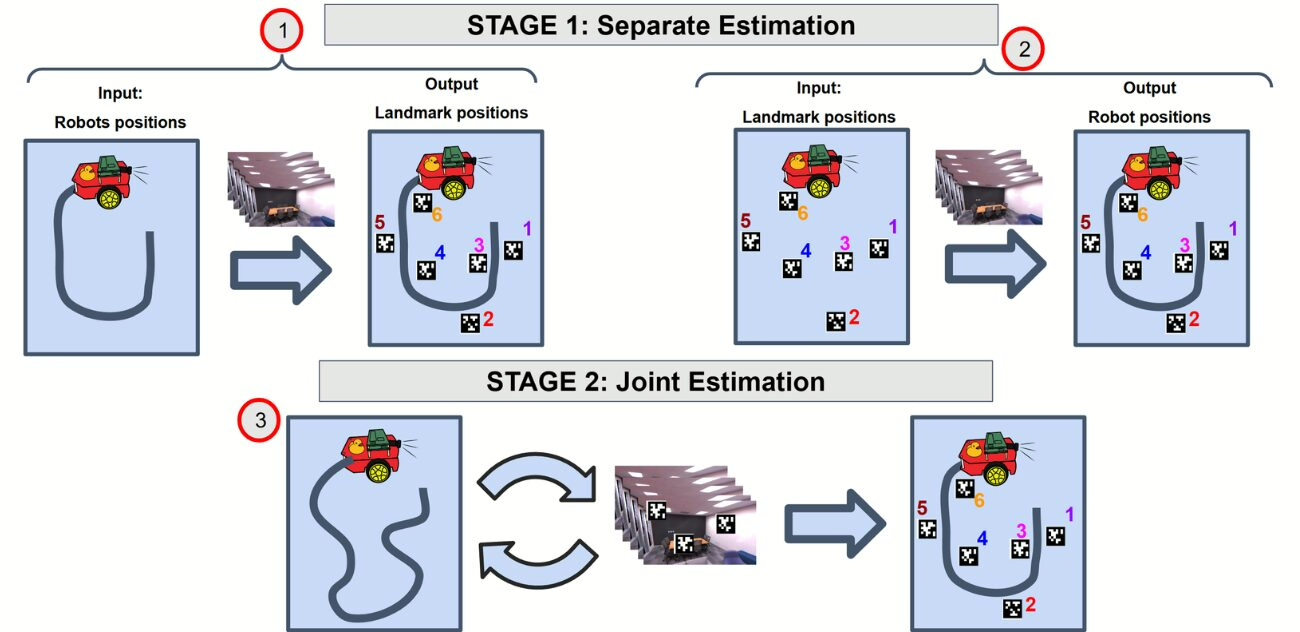
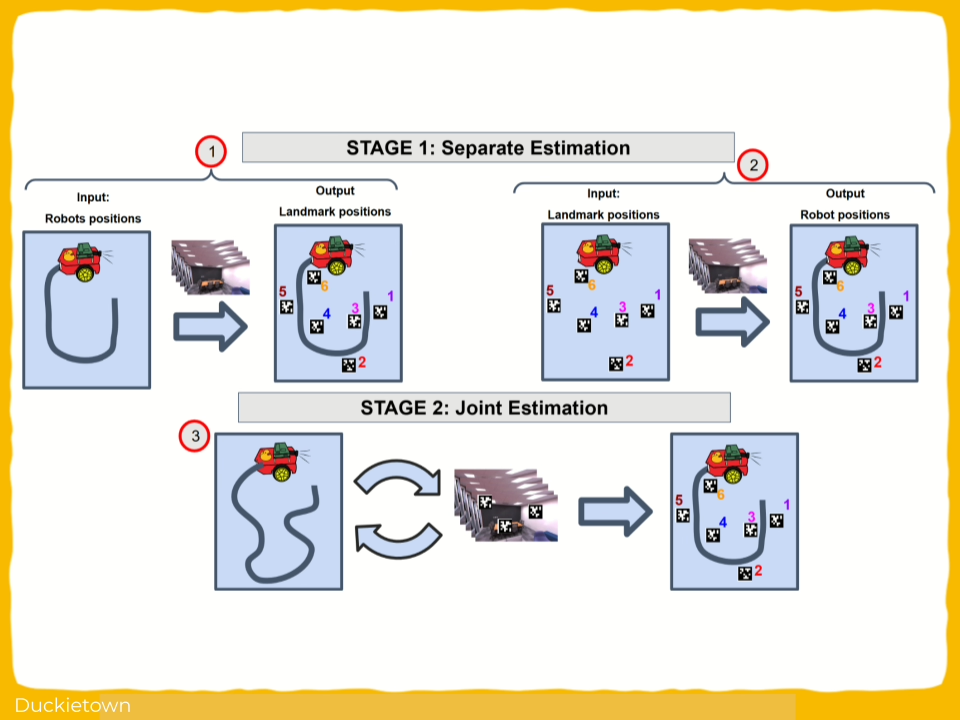
This SLAM-Duckietown project addresses a famous challenge in robotics: concurrently estimating the agent’s pose and mapping the environment under uncertainty.

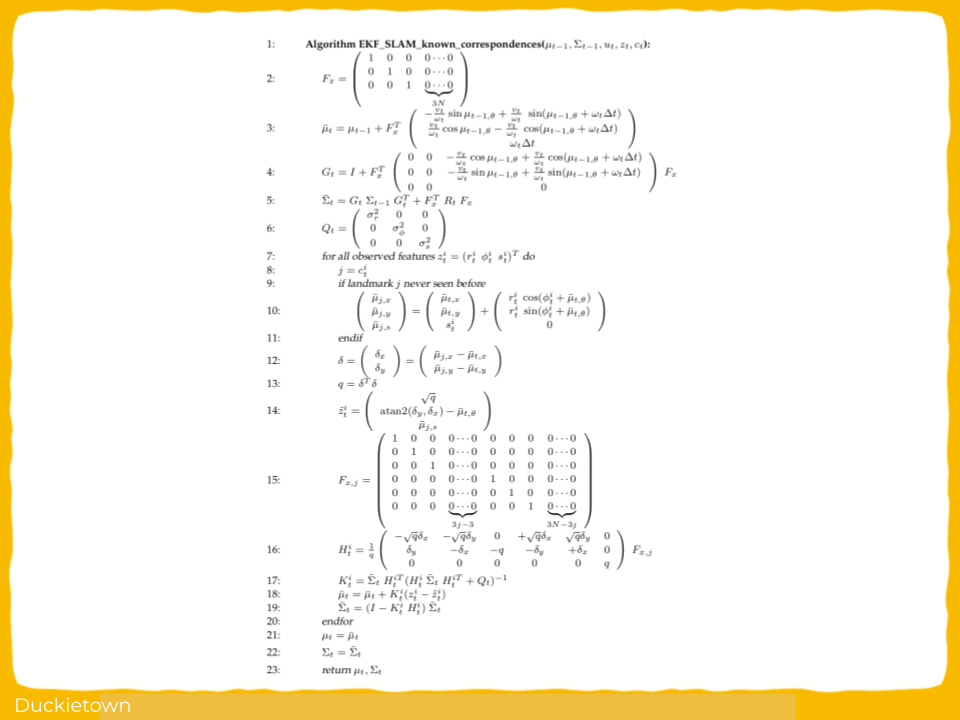
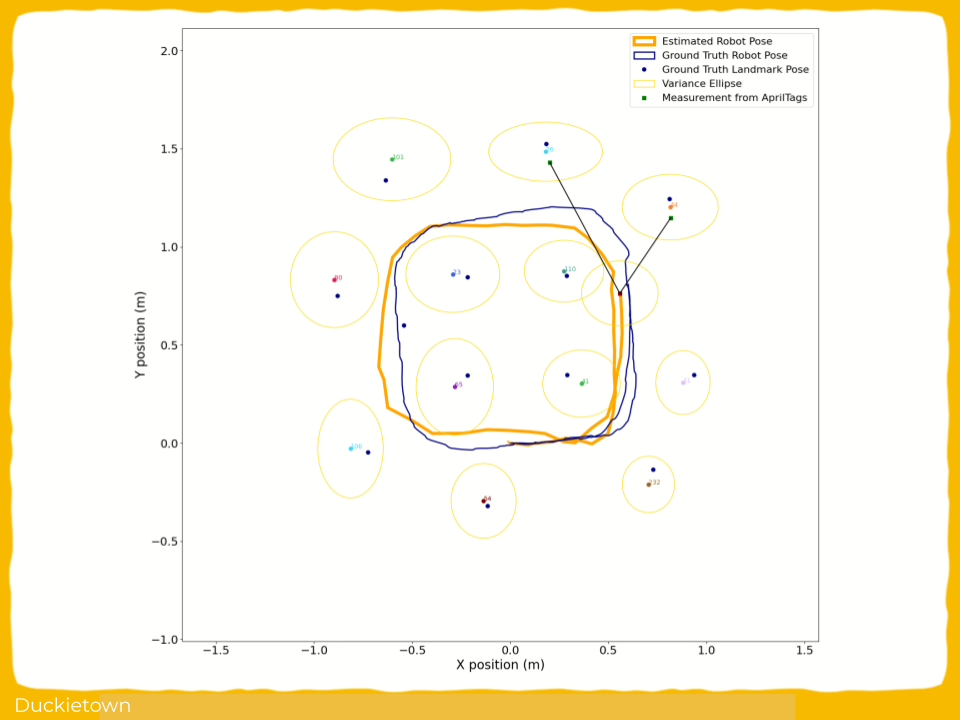
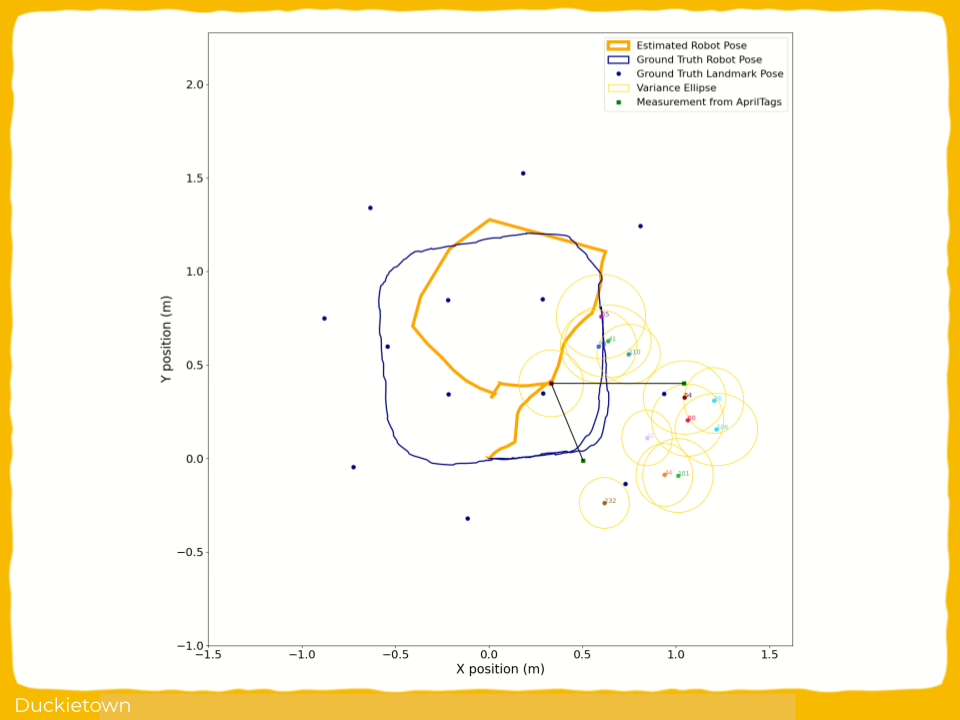
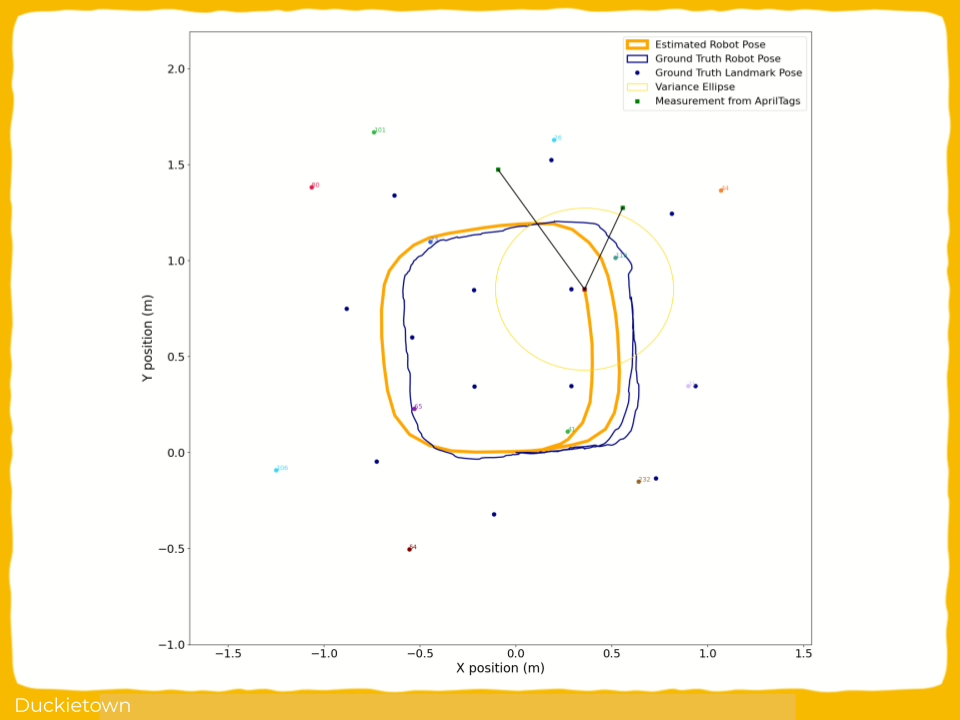
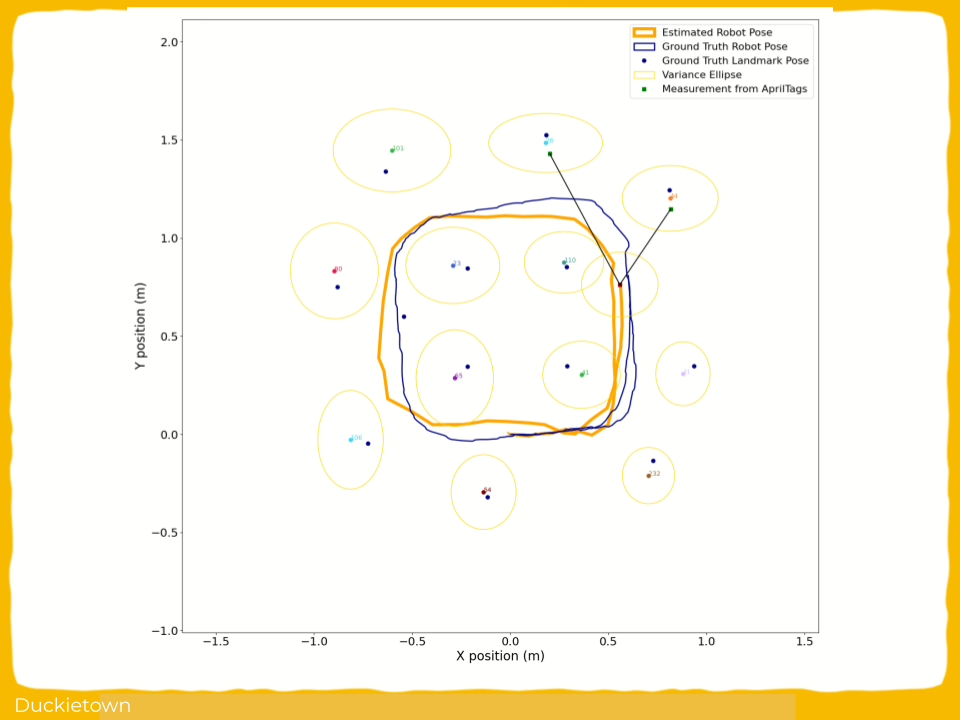
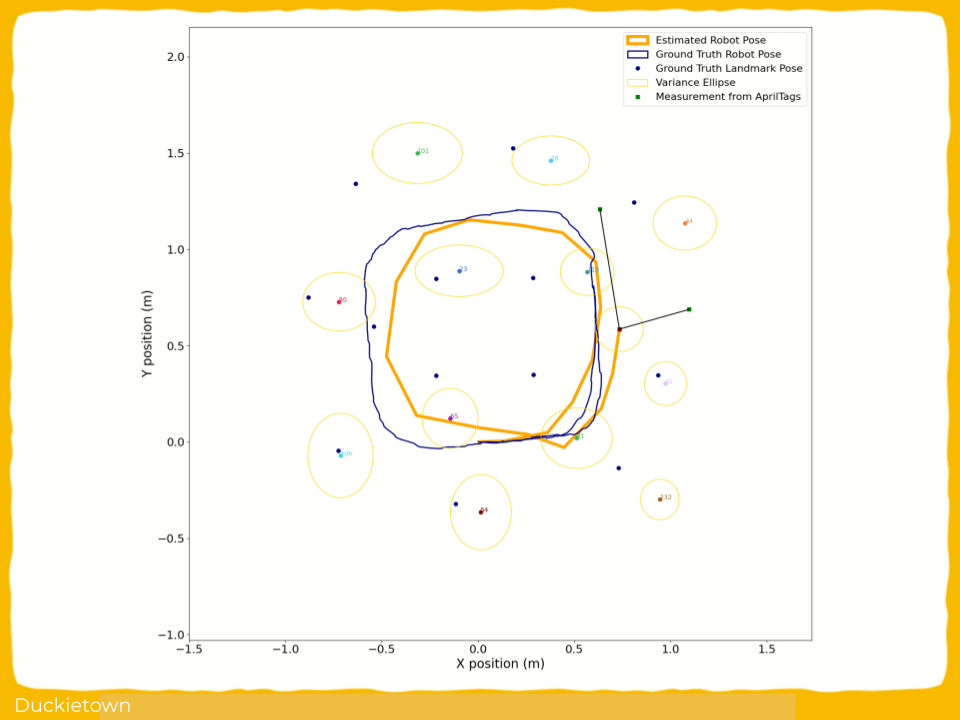
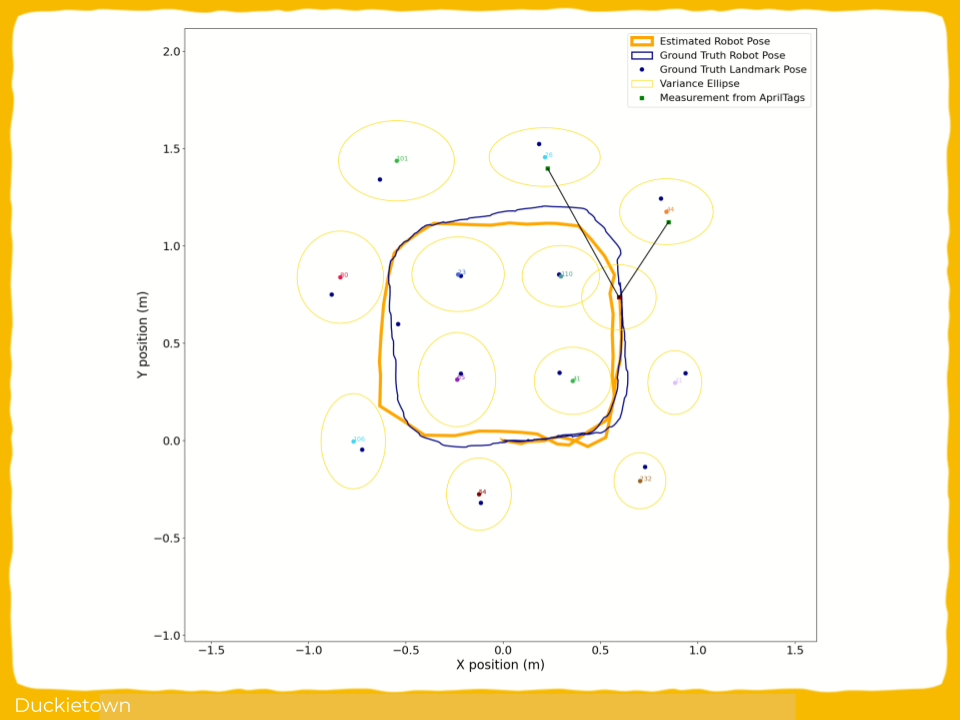
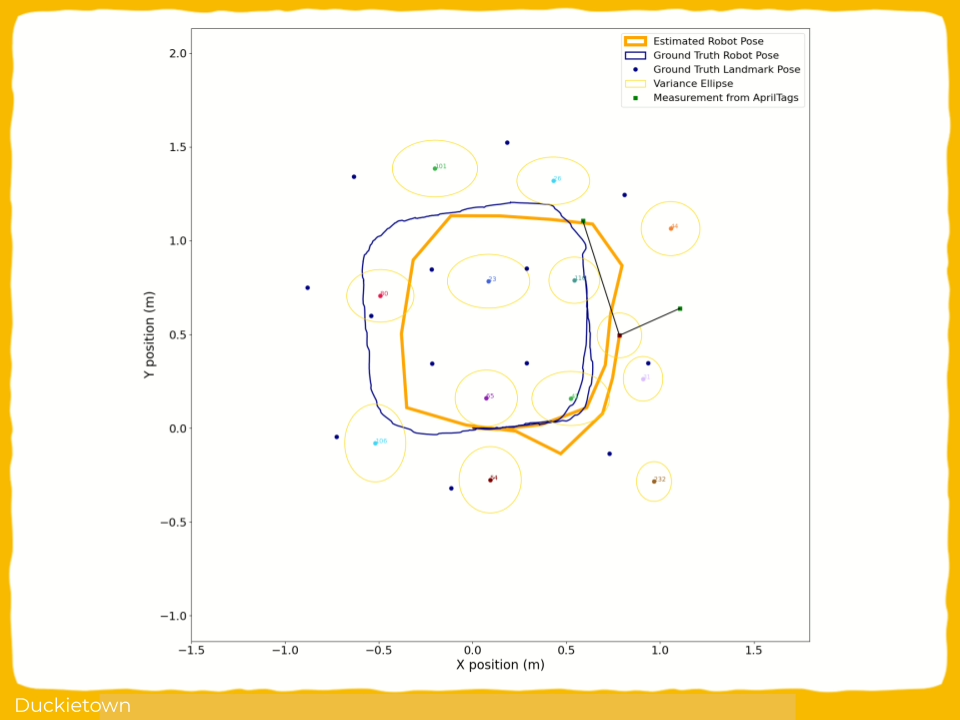
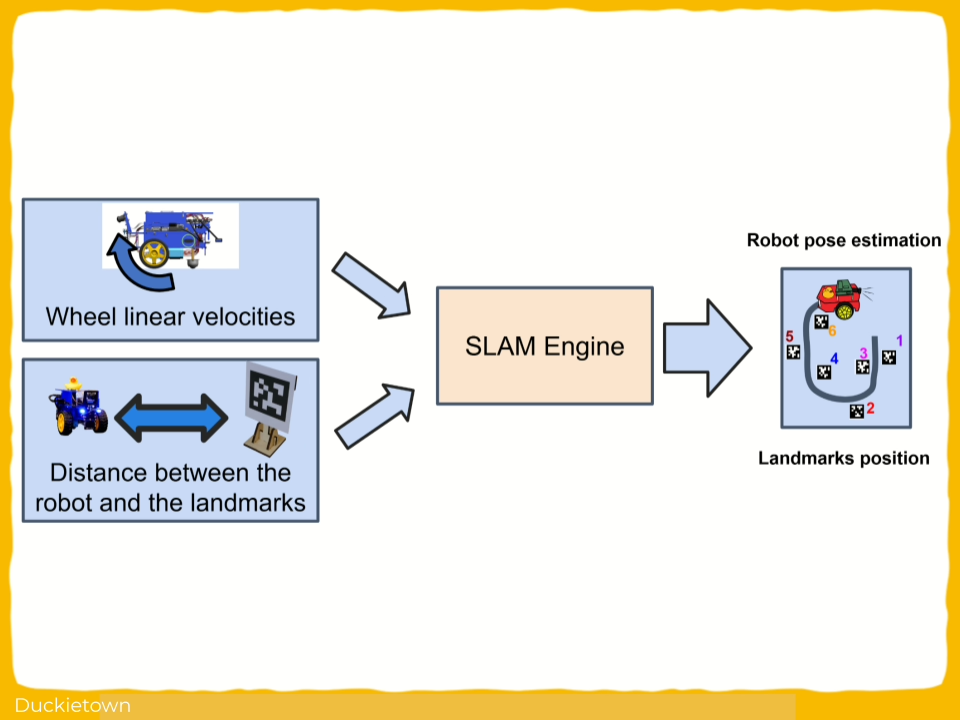
This project implements an Extended Kalman Filter (EKF) SLAM algorithm on Duckiebots (DB21-J4), combining odometry from wheel encoders and landmark observations from April tags.

The objective is to maintain an evolving posterior over the Duckiebot’s pose (x,y,θ) and landmark positions by recursively integrating noisy control inputs and observations.

This upgrade shifts Duckiebots from open-loop dead reckoning units into closed-loop, state-estimating agents. For Duckietown, it reinforces its use as an experimental ground for real-world robotics challenges, including data association, observability, filter consistency, and multi-sensor fusion.

The challenges and approach

The system applies the EKF-SLAM pipeline in two stages: motion prediction and measurement correction.

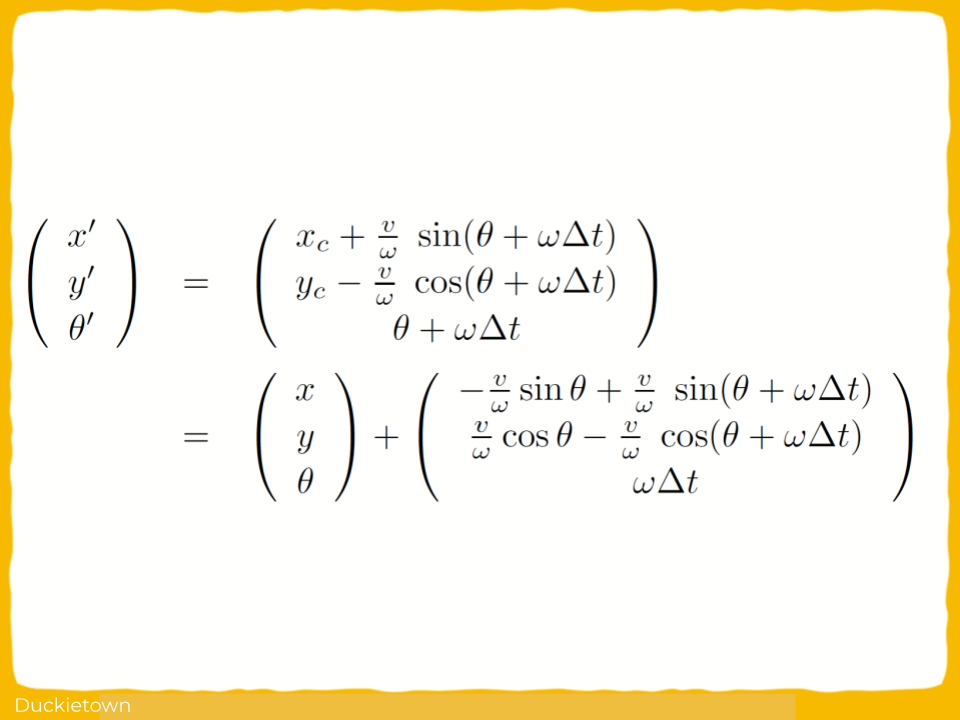
Prediction propagates the robot’s belief through a non-holonomic kinematic model under process noise, using arc-based interpolation to reduce discretization error.

Correction incorporates April tag detections via a Perspective-n-Point (PnP) solution, updating the state with landmark-relative observations under observation noise. The state vector grows dynamically as new landmarks are observed, and the covariance matrix tracks both robot and landmark uncertainty.

The technical challenges include maintaining filter consistency under linearization errors, ensuring landmark observability despite partial fields of view, and synchronizing asynchronous data from wheel encoders, camera frames, and Vicon ground-truth captures.

Moreover, AprilTag detection is constrained by lighting artifacts and pose ambiguity at shallow viewing angles, introducing non-Gaussian errors that the EKF must approximate linearly. 

Moreover, tuning noise parameters presents the classical tradeoff: too little noise leads to overconfidence and divergence; too much noise leads to filter paralysis. Deployment exposes the systemic difference between simulation and physical experiments: real Duckiebots do not move with perfect kinematics, cameras suffer from radial distortion, and computation suffers from non-deterministic latency.

In SLAM, everything that can drift will drift, and the role of the filter is to drift more slowly than entropy.

Did this work spark your curiosity?

Extended Kalman Filter (EKF) SLAM for Duckiebots: Authors

AmirHossein Zamani was a former Duckietown student, and currently, he is pursuing his Ph.D. in Computer Science at Mila (Quebec AI Institute) and  Concordia University, Canada. He is also working as an AI Research Scientist Intern at Autodesk in Montreal, Canada.

Léonard Oest O’Leary was a former Duckietown student, and currently, he is pursuing his Master of Science in Computer Science at the University of Montreal, Canada.

Kevin Lessard was a former Duckietown student, and currently, he is pursuing his Master of Science in Machine Learning at Mila – Quebec AI Institute in Montreal, Canada.

Learn more

Duckietown is a modular, customizable, and state-of-the-art platform for creating and disseminating robotics and AI learning experiences.

Duckietown is designed to teach, learn, and do research: from exploring the fundamentals of computer science and automation to pushing the boundaries of knowledge.

These spotlight projects are shared to exemplify Duckietown’s value for hands-on learning in robotics and AI, enabling students to apply theoretical concepts to practical challenges in autonomous robotics, boosting competence and job prospects.
Monocular Navigation in Duckietown Using LEDNet Architecture

Monocular Navigation in Duckietown Using LEDNet Architecture

Monocular Navigation in Duckietown Using LEDNet Architecture

Project Resources

Project highlights

Here is a visual tour of the authors’ work on implementing monocular navigation using LEDNet architecture in Duckietown*.

*Images from “Monocular Robot Navigation with Self-Supervised Pretrained Vision Transformers, M. Saavedra-Ruiz, S. Morin, L. Paull. ArXiv: https://arxiv.org/pdf/2203.03682

Why monocular navigation?

Image sensors are ubiquitous for their well-known sensory traits (e.g., distance measurement, robustness, accessibility, variety of form factors, etc.). Achieving autonomy with monocular vision, i.e., using only one image sensor, is desirable, and much work has gone into approaches to achieve this task. Duckietown’s first Duckiebot, the DB17, was designed with only a camera as sensor suite to highlight the importance of this challenge!  

But images, due to the integrative nature of image sensors and the physics of the image generation process, are subject to motion blur, occlusions, and sensitivity to environmental lighting conditions, which challenge the effectiveness of “traditional” computer vision algorithms to extract information. 

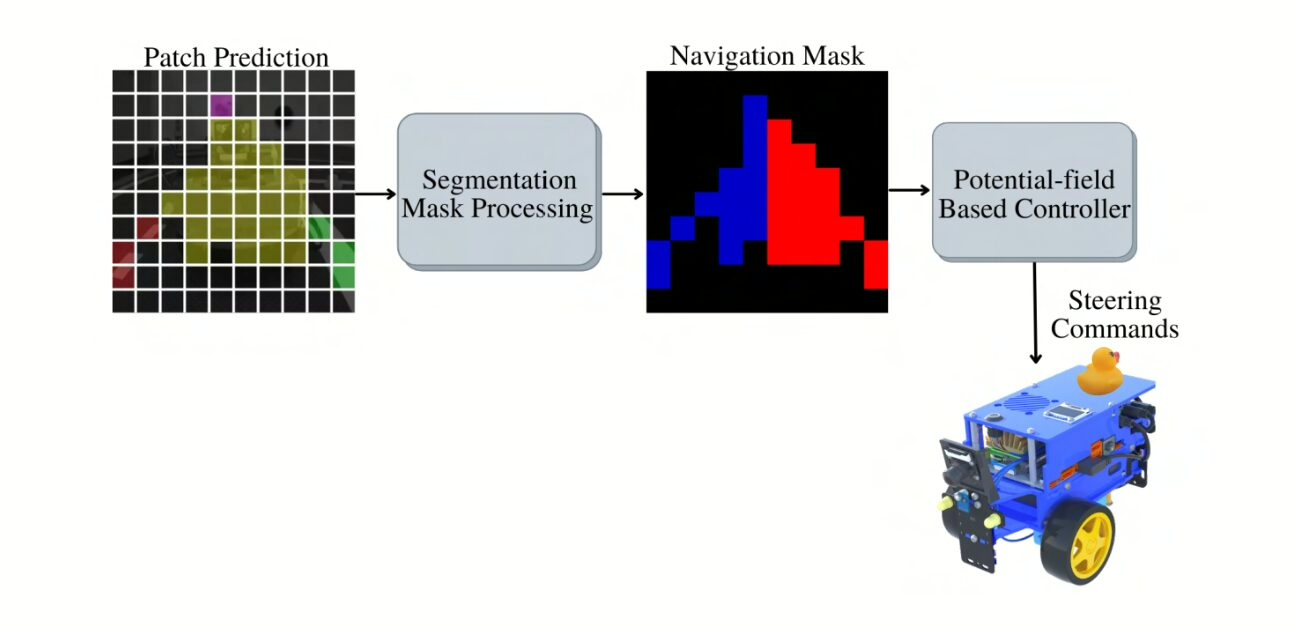
In this work, the author uses “LEDNet” to mitigate some of the known limitations of image sensors for use in autonomy. LEDNet’s encoder-decoder architecture with high resolution enables lane-following and obstacle detection. The model processes images at high frame rates, allowing recognition of turns, bends, and obstacles, which are useful for timely decision-making. The resolution improves the ability to differentiate road markings from obstacles, and classification accuracy.

LEDNet’s obstacle-avoidance algorithm can classify and detect obstacles even at higher speeds. Unlike Vision Transformers (wiki) (ViT) models, LEDNet avoids missing parts of obstacles, preventing robot collisions.

The model handles small obstacles by identifying them earlier and navigating around them. In the simulated Duckietown environment, LEDNet outperforms other models in lane-following and obstacle-detection tasks.

LEDNet uses “real-time” image segmentation to provide the Duckiebot with information for steering decisions. While the study was conducted in a simulation, the model’s performance indicates it would work in real-world scenarios with consistent lighting and predictable obstacles.

The next is to try it out! 

Monocular Navigation in Duckietown Using LEDNet Architecture - the challenges

In implementing monocular navigation in this project, the author faced several challenges: 

  1. Computational demands: LEDNet’s high-resolution processing requires computational resources, particularly when handling real-time image segmentation and obstacle detection at high frame rates.

  2. Limited handling of complex environments: the lane-following and obstacle-avoidance algorithm used in this study does not handle crossroads or junctions, limiting the model’s ability to navigate complex road structures.

  3. Simulation vs. real-world application: The study relies on a simulated environment where lighting, obstacle behavior, and road conditions are consistent. Implementing the system in the real world introduces variability in these factors, which affects the model’s performance.

  4. Small obstacle detection: While LEDNet performs well in detecting small obstacles compared to ViT, the detection of small obstacles is still dependent on the resolution and segmentation quality.

Project Report

Project Author

Angelo Broere is currently working as an Oproepkracht at Compressor Parts Service, Netherlands.

Learn more

Duckietown is a modular, customizable and state-of-the-art platform for creating and disseminating robotics and AI learning experiences.

It is designed to teach, learn, and do research: from exploring the fundamentals of computer science and automation to pushing the boundaries of knowledge.