


Self-Driving Cars with Duckietown
The world’s first robot autonomy massive open online course with hardware
Self-Driving Cars with Duckietown Massive Open Online Course (MOOC)
Self-Driving Cars with Duckietown is the world’s first hardware-based massive open online course (MOOC) in AI robotics.
Created in collaboration with ETH Zürich, the University of Montreal, and the Toyota Technological Institute at Chicago (TTIC), Self-Driving Cars with Duckietown is free to enroll in.
Hosted on the edX platform, Self-Driving Cars with Duckietown is a “grand tour” of robot autonomy: the science and technology behind enabling machines to make their own decisions and accomplish broadly defined tasks such as lane following, object detection, planning, and more.
Self-driving cars with Duckietown covers from the theory, to the implementation, to the deployment: in simulation, as well as on Duckiebots (real-world model autonomous vehicles).
Starting from the 2025 edition, Self-Driving Cars with Duckietown now supports virtual Duckiebots: digital twins of physical robots, for an even more accessible entry to the beautiful world of physical AI.
MOOC Factsheet
- Name: Self-driving cars with Duckietown
- Platform: edX
- Cost: free to enroll
- Instructors: Swiss Federal Institute of Technology in Zurich (ETHZ), Université de Montréal (UdM), Toyota Technological Institute at Chicago (TTIC)
Prerequisites
- Basic Linux, Python, Git
- Elements of linear algebra, probability, calculus
- Elements of kinematics, dynamics
- Computer with native Ubuntu installation
- Broadband internet connection
What you will learn
- Computer Vision
- Robot operations
- Differential drive Modeling
- Object Detection
- Onboard localization
- Robot Control (PID)
- Planning
- Reinforcement Learning
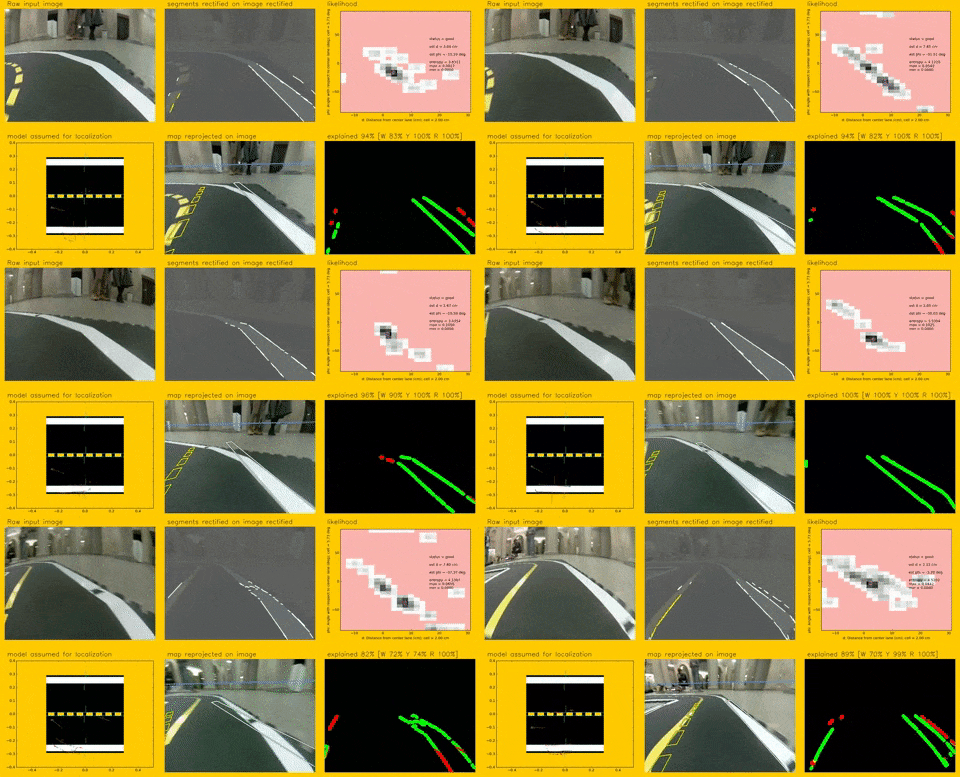
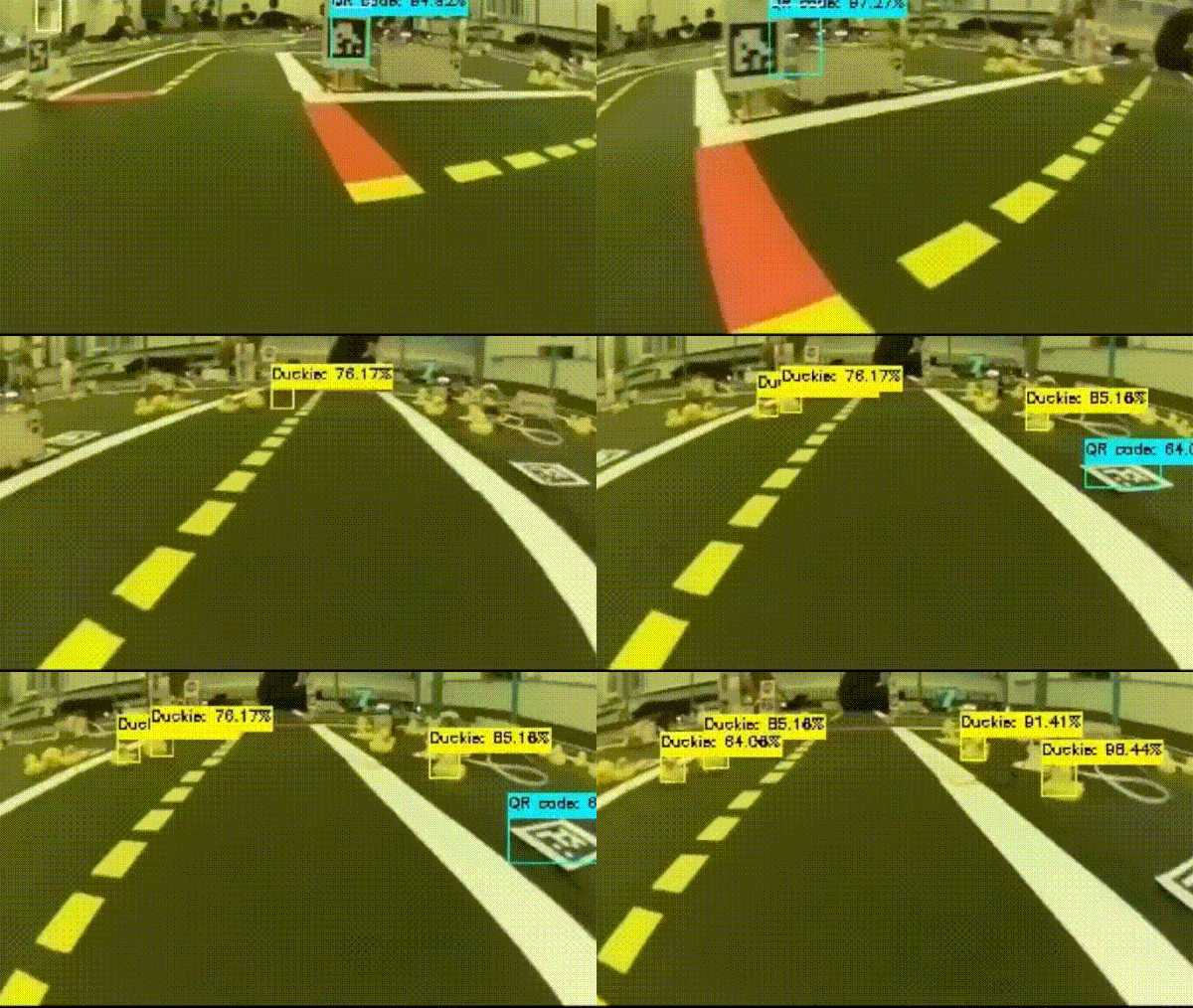
Robot Perception: Duckiebots detect lane marking on the fly and use mathematical models of their camera and environment to estimate their position and orientation in the lane.
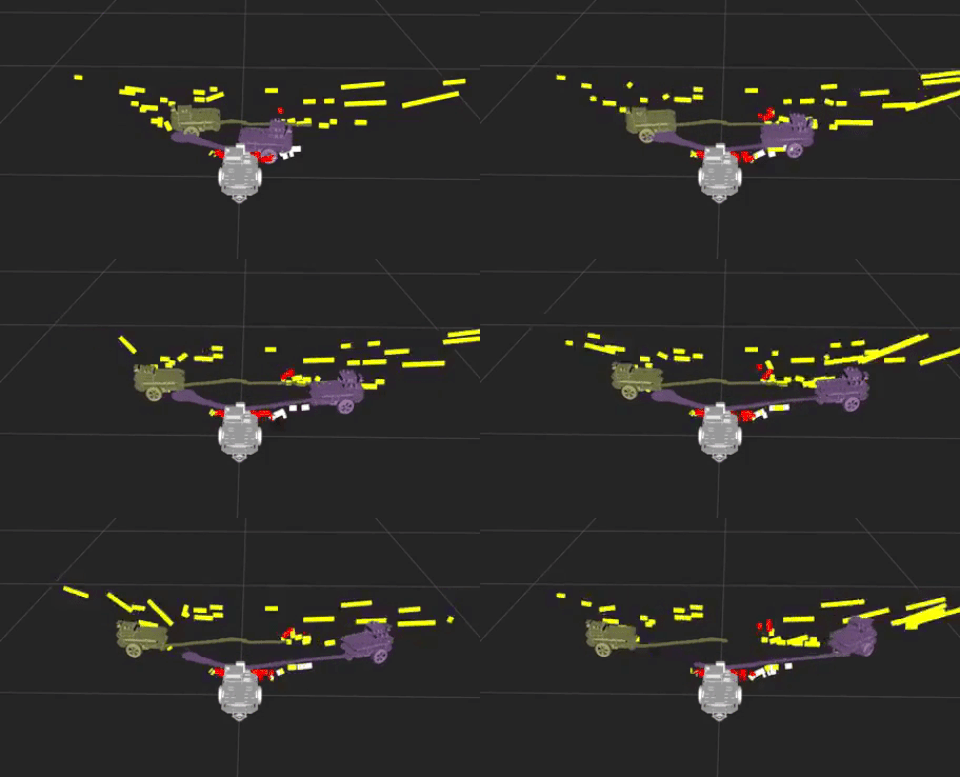
Duckiebot Detection: driving in Duckietown is fun but safety should always be paramount. DuckieBots can detect other vehicles and estimate their relative poses to avoid collisions.
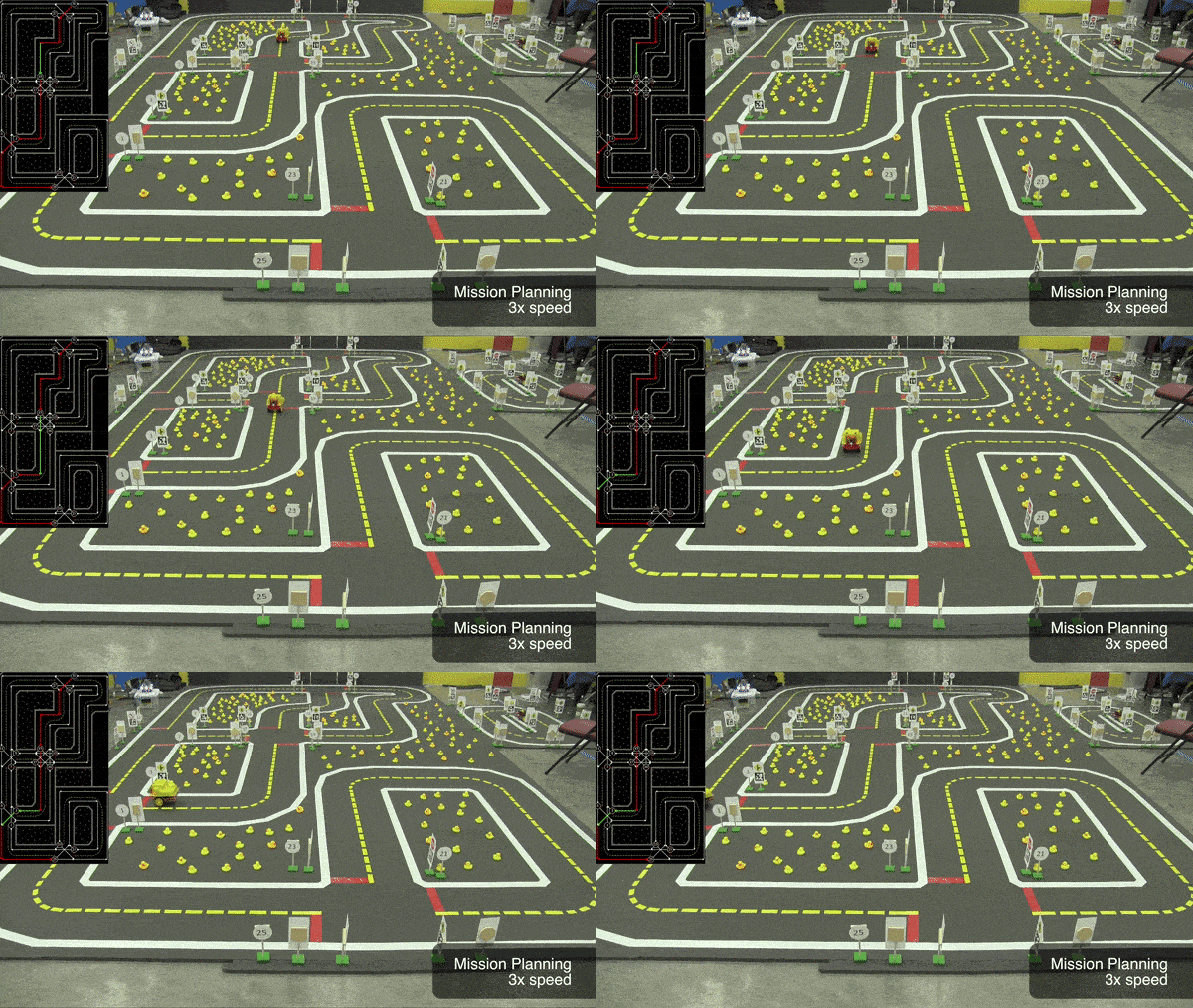
Robot Planning: as Duckietowns grow bigger, smart Duckiebots plan their path in town. Traffic signs at intersections provide landmarks to localize on the global map and determine next turns.
Pedestrian detection: there are many obstacles in Duckietown – some move and some don’t. Being able to detect pedestrians (duckies) is important to guarantee safe driving.