Visual Feedback for Lane Tracking in Duckietown

Visual Feedback for Autonomous Lane Tracking in Duckietown

General Information

Visual Feedback for Autonomous Lane Tracking in Duckietown

How can vehicle autonomy be achieved by relying only on visual feedback from the onboard camera?

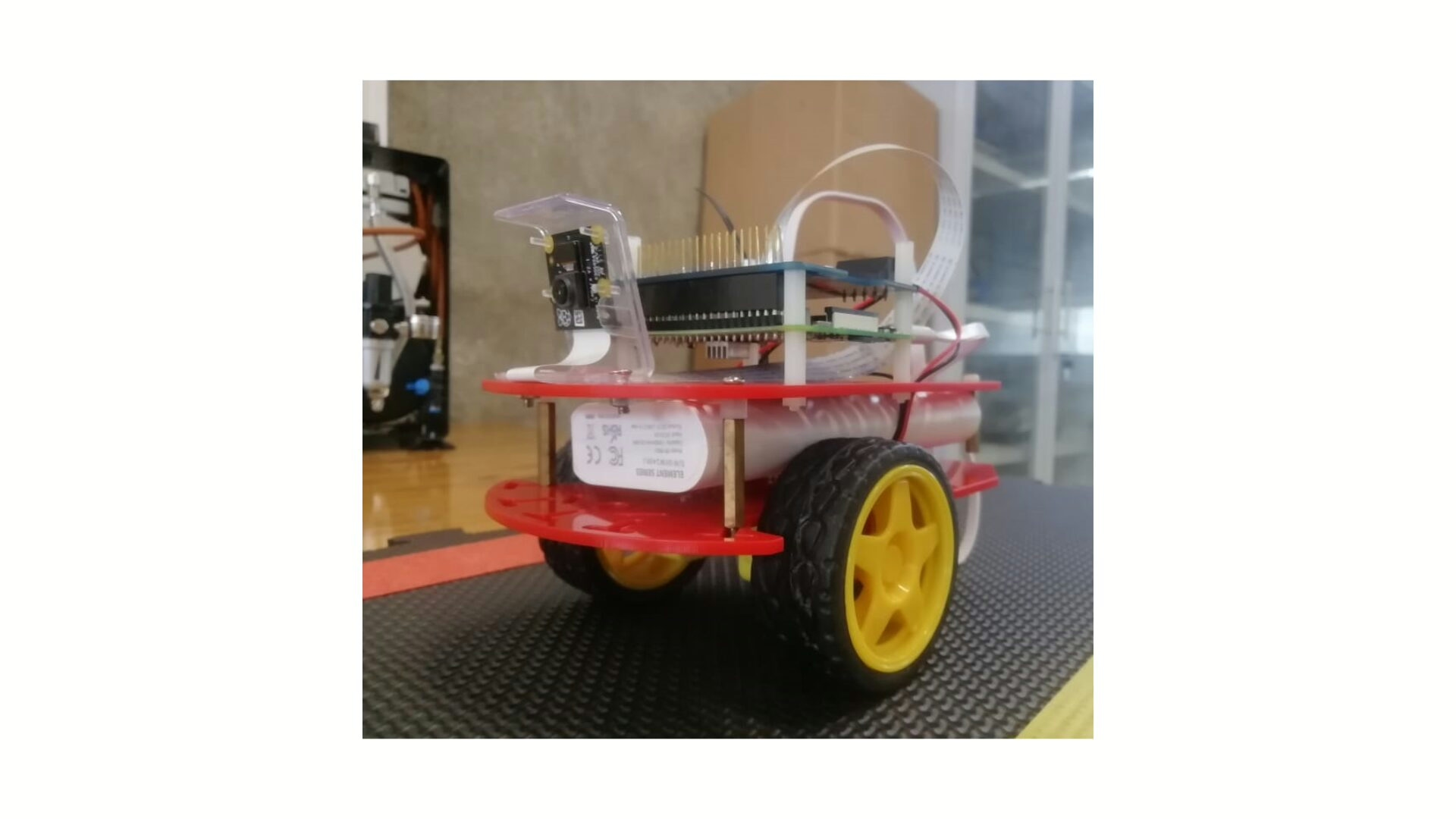
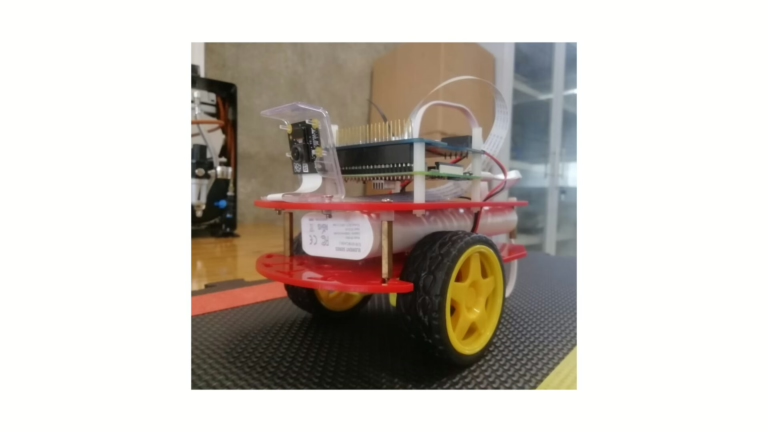
This work presents an implementation of lane following for the Duckietbot (DB17) using visual feedback as the only onboard sensor. The approach relies on real-time lane detection, and pose estimation, eliminating the need for wheel encoders.

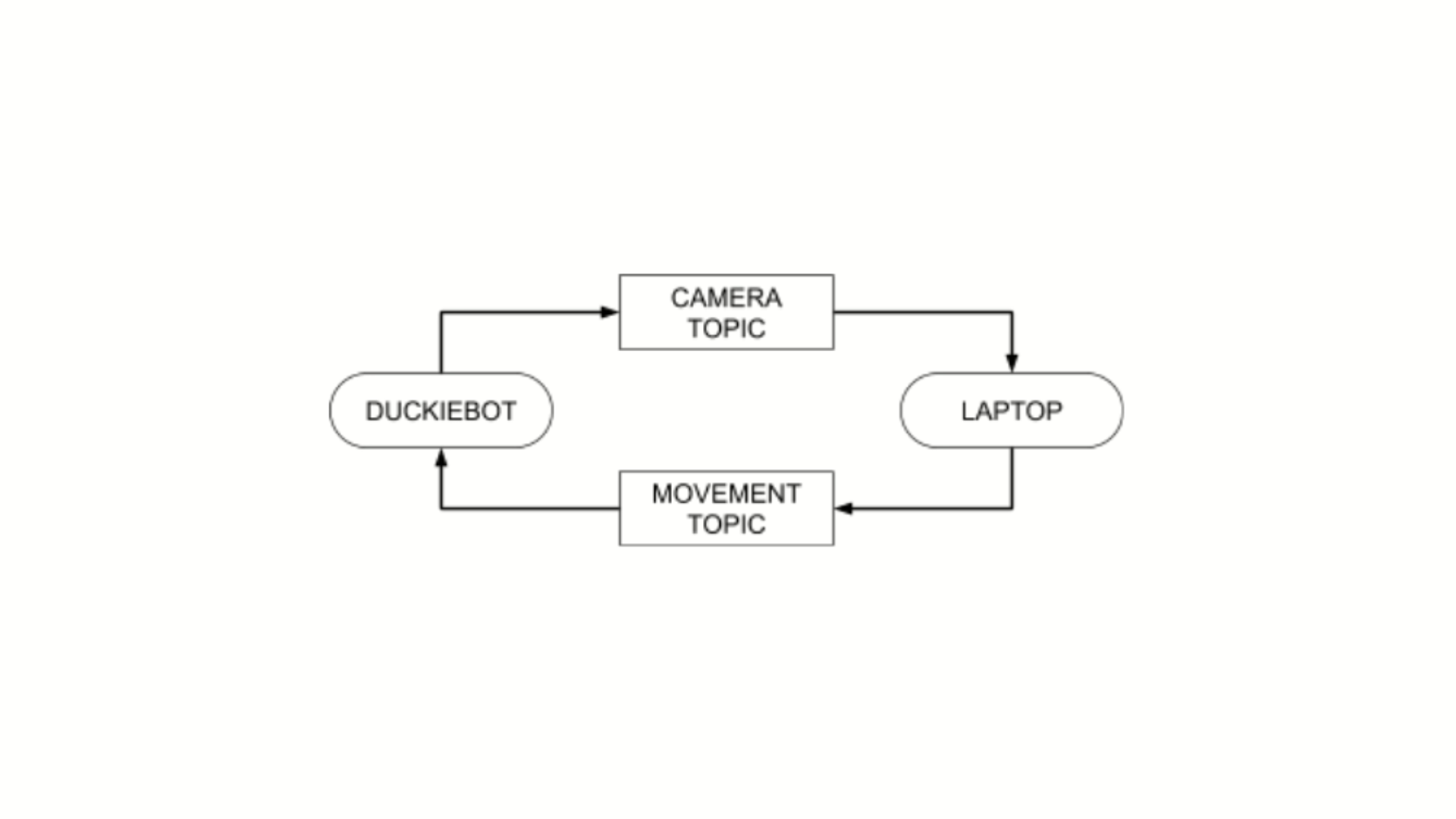
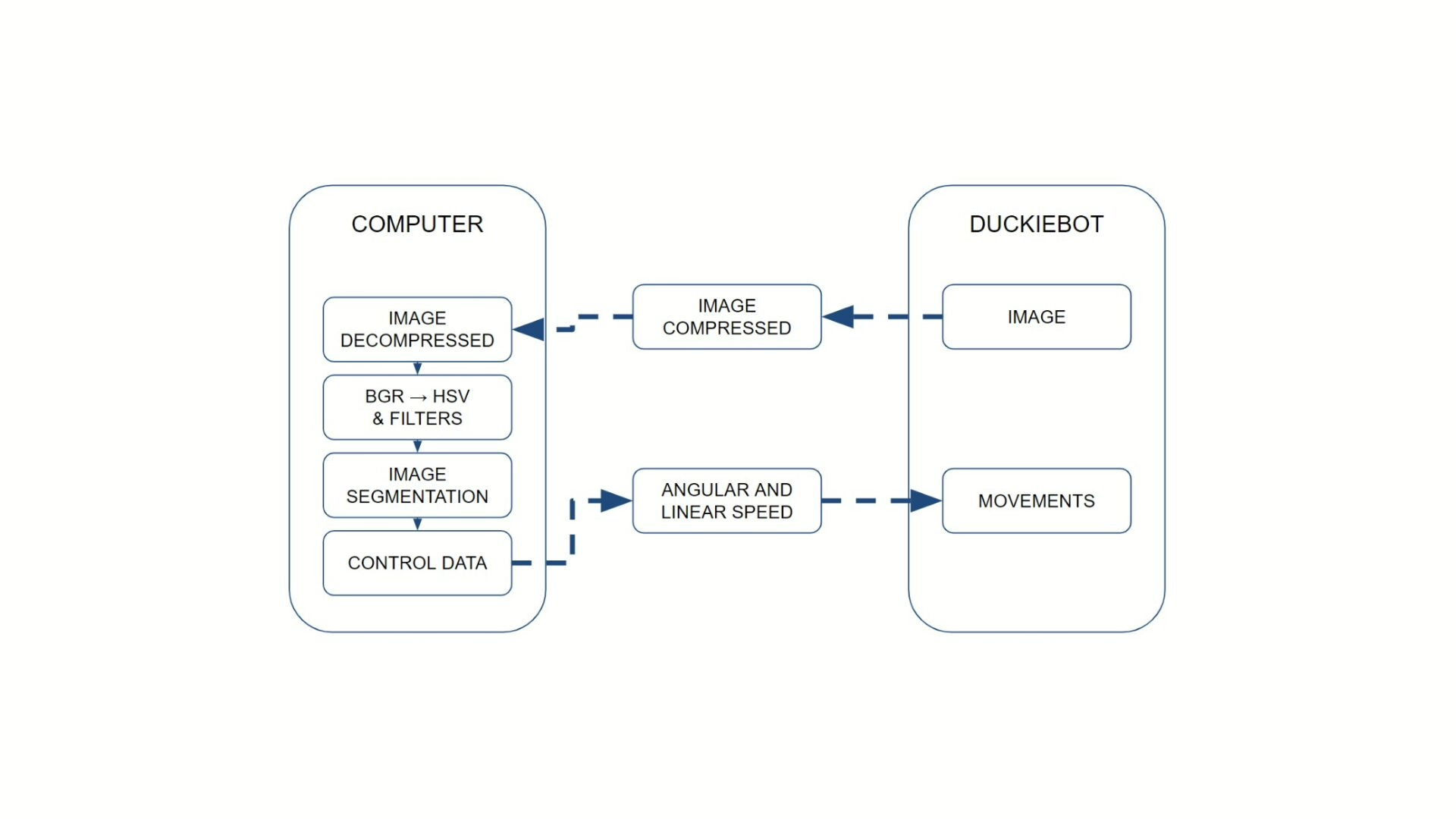
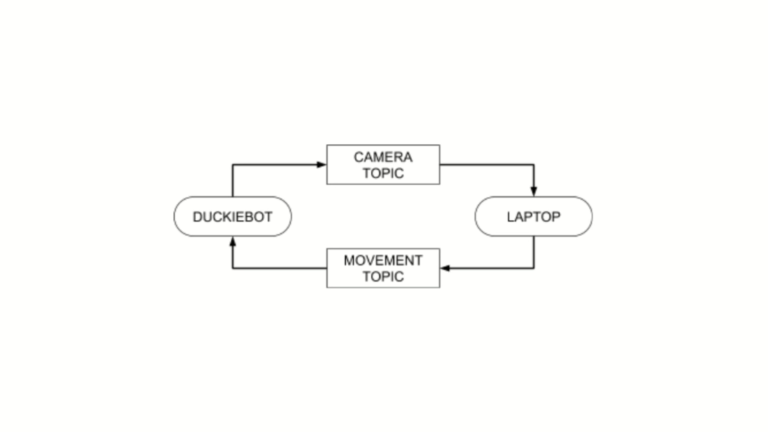
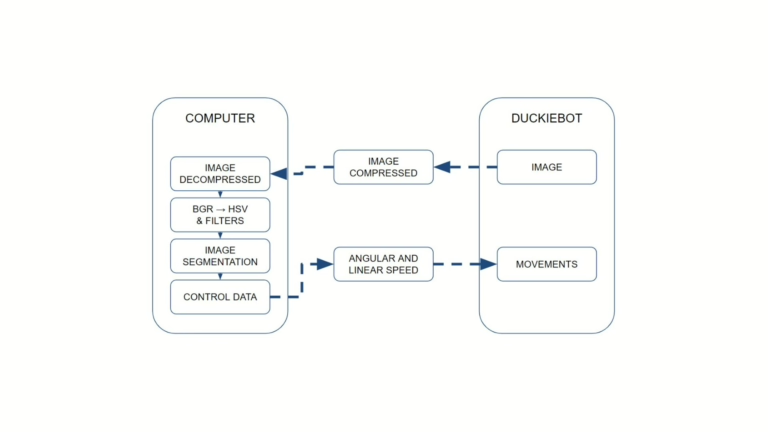
The onboard computation is provided by a Raspberry Pi, which performs low-level motor control, while high-level image processing and decision-making are offloaded to an external ROS-enabled computer.

The key technical aspects of the implemented autonomy pipeline include:

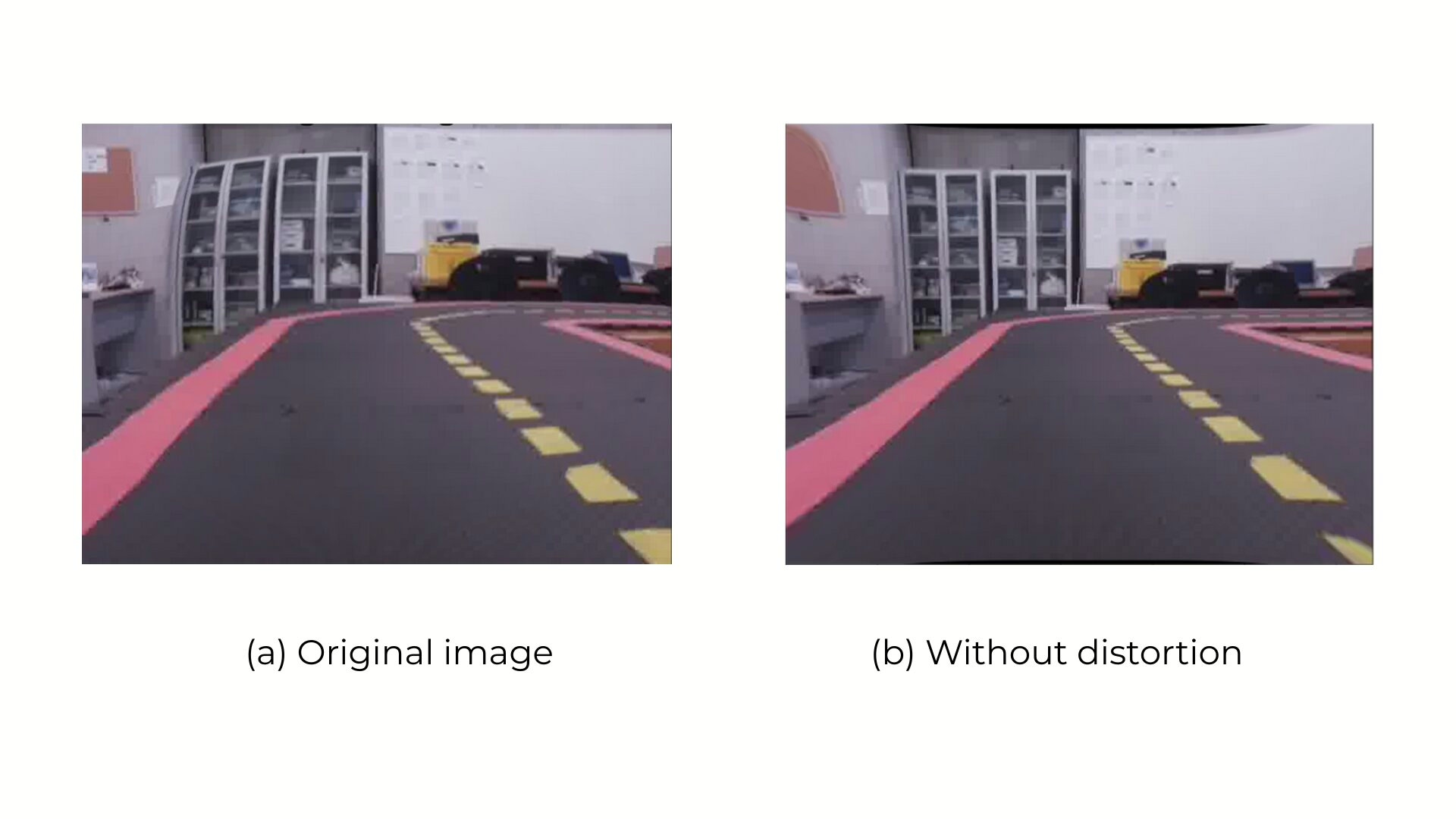
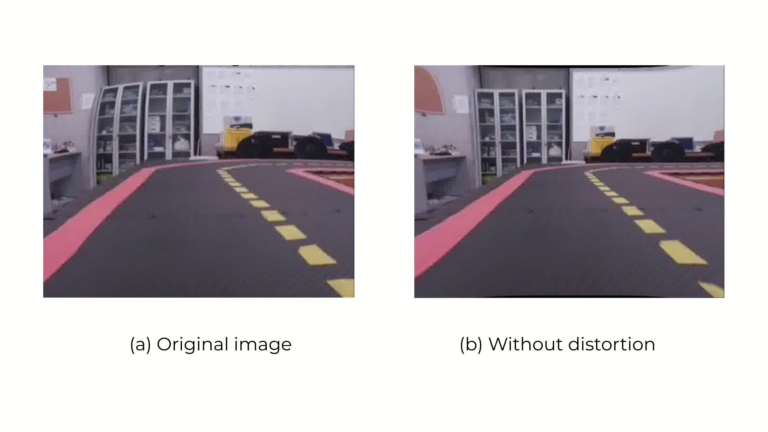
  • Camera calibration to correct fisheye lens distortion;

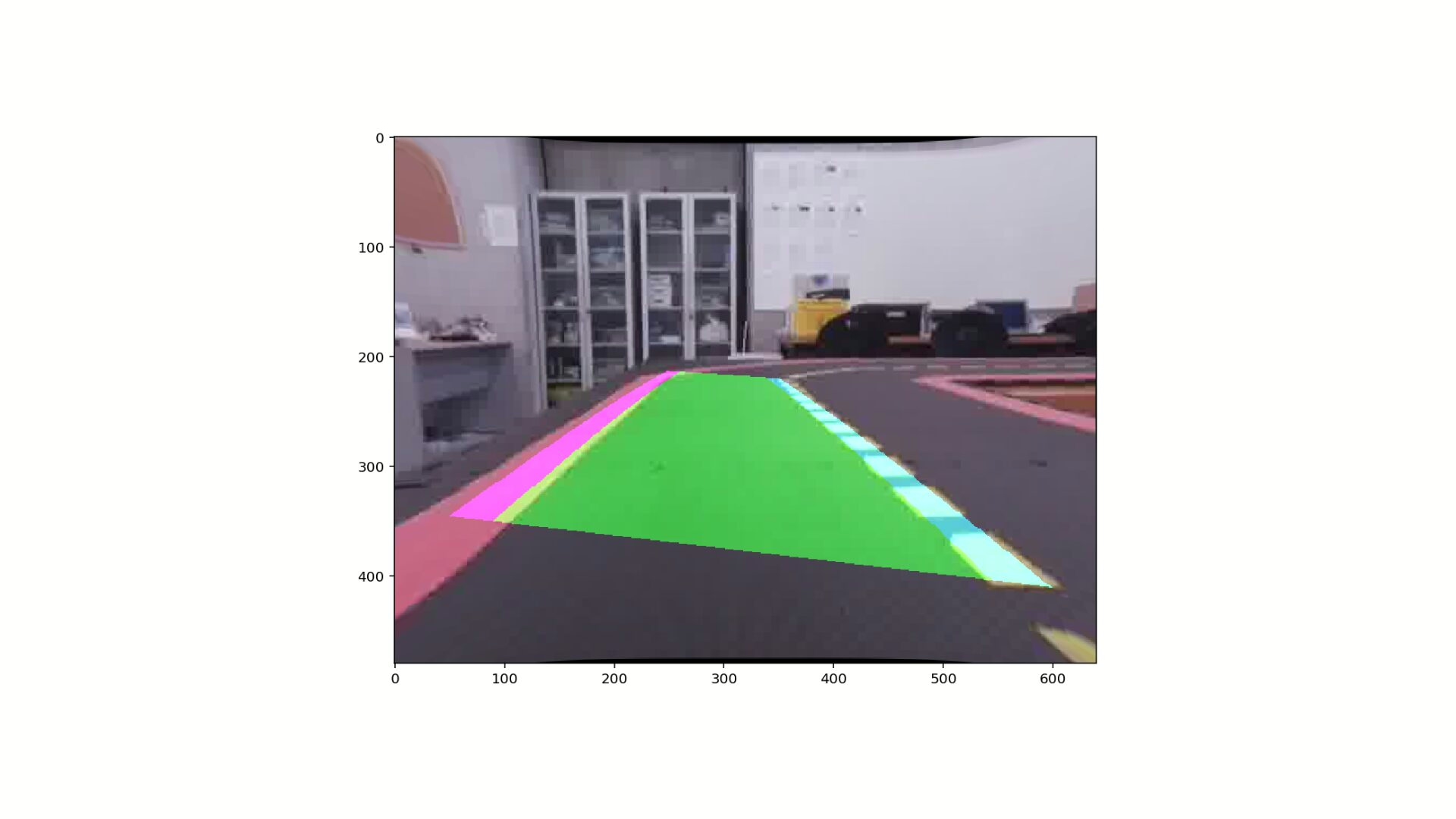
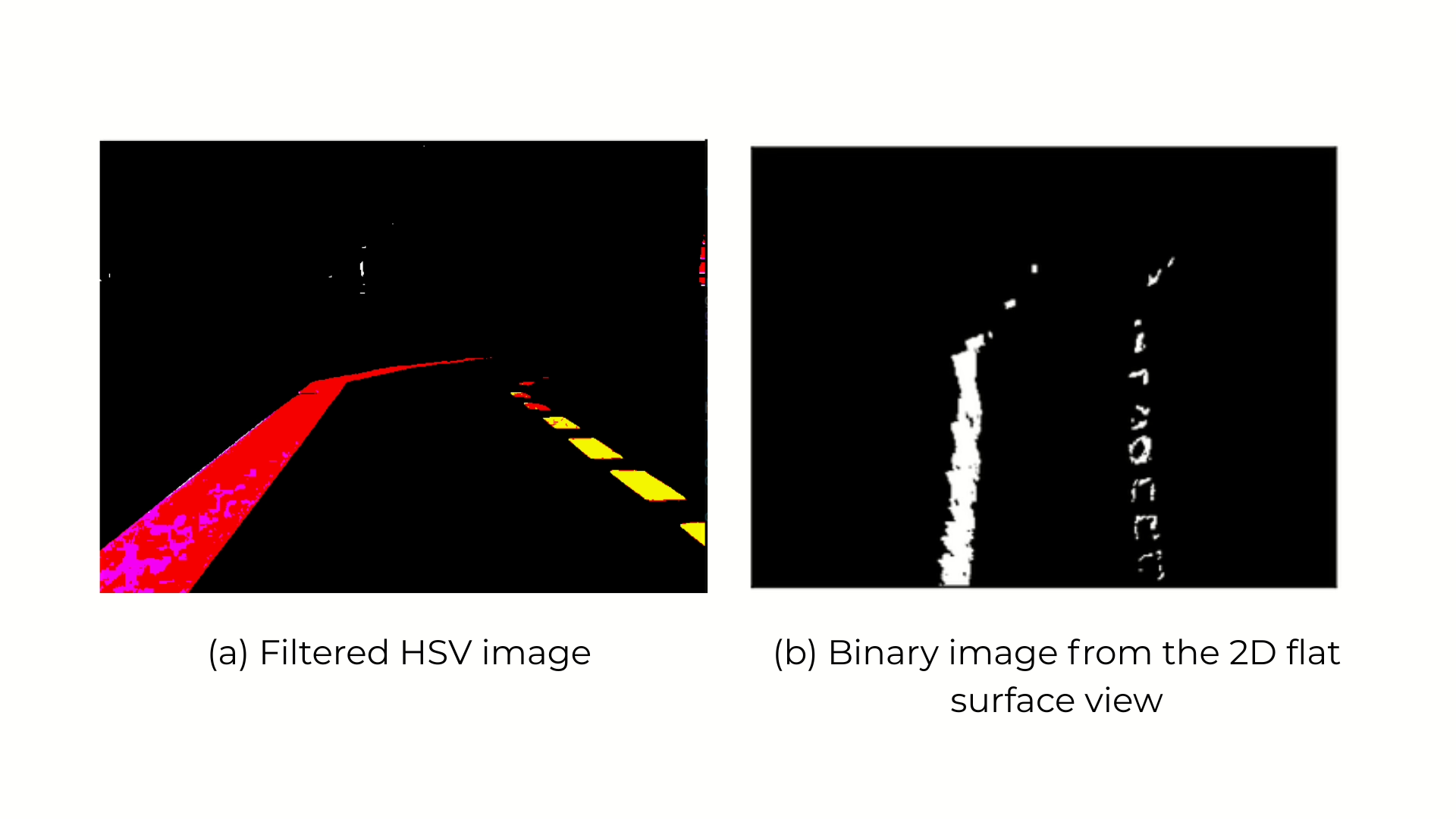
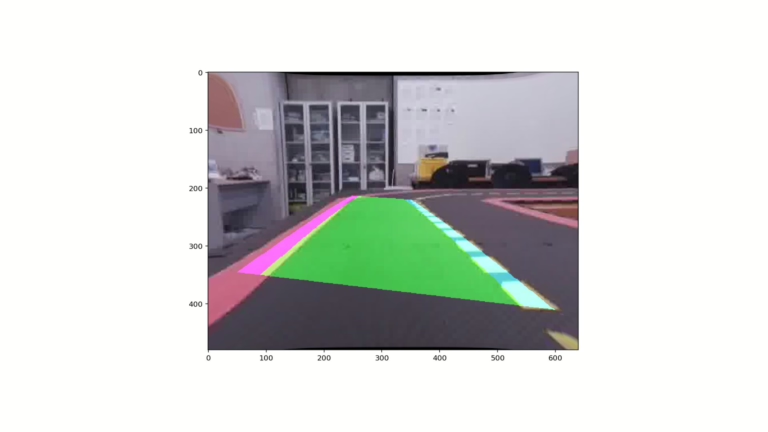
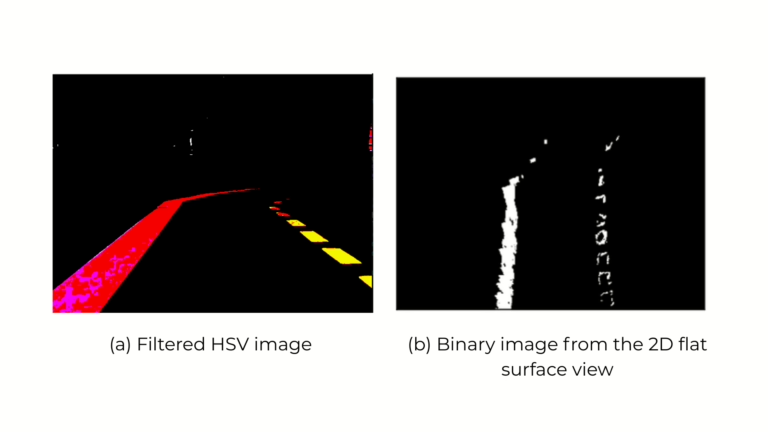
  • HSV-based image segmentation for lane line detection;

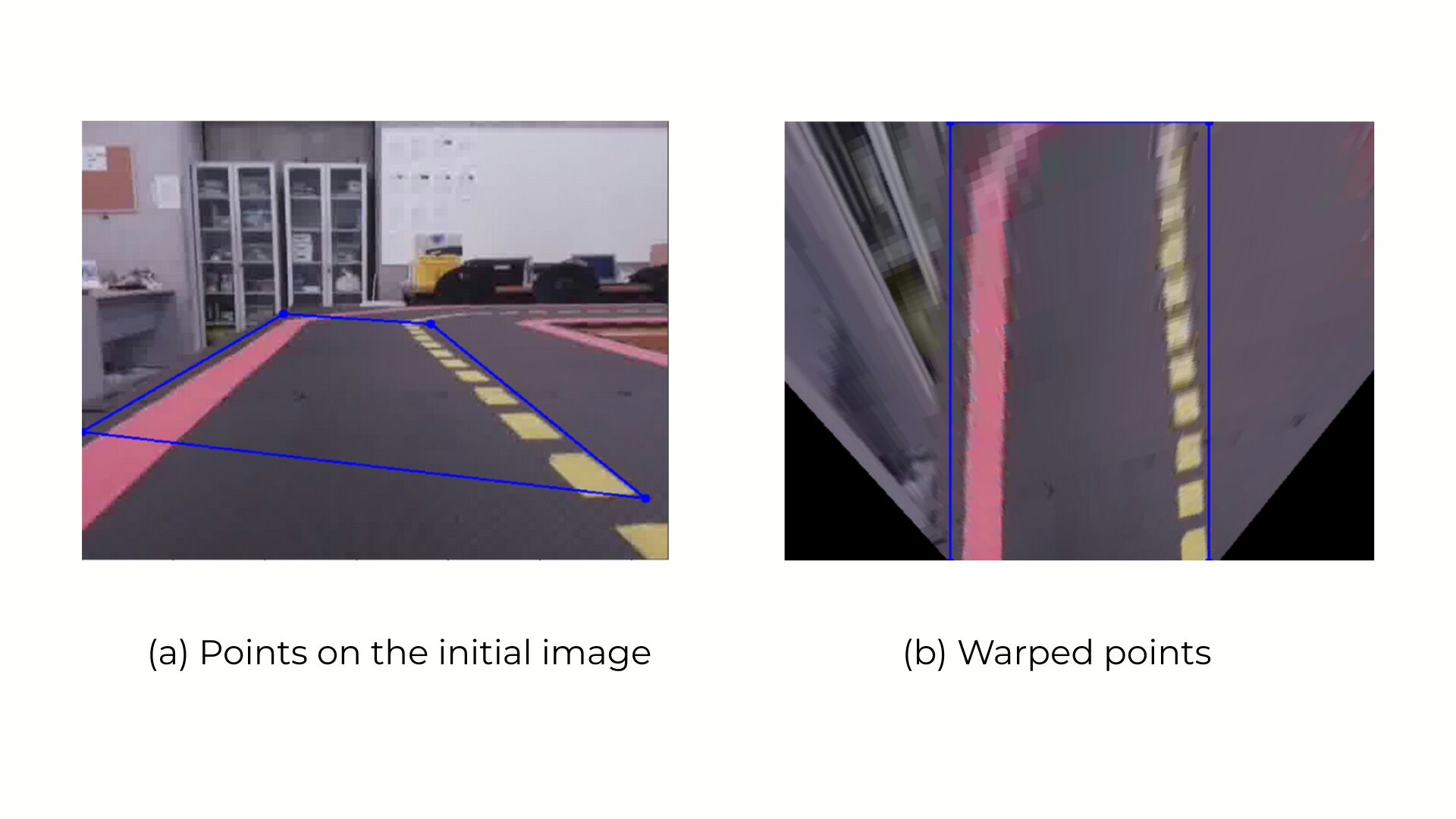
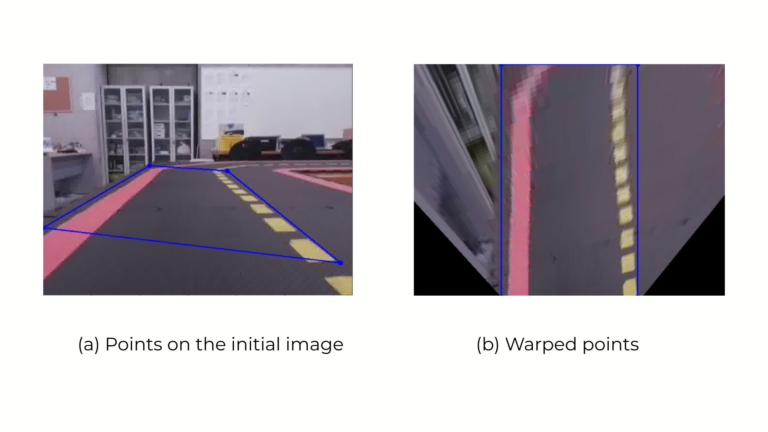
  • Aerial perspective transformation for geometric consistency;

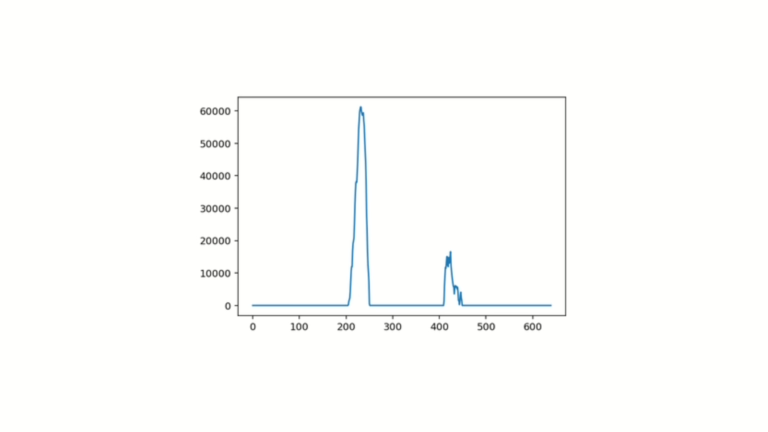
  • Histogram-based color separation of continuous and dashed lines;

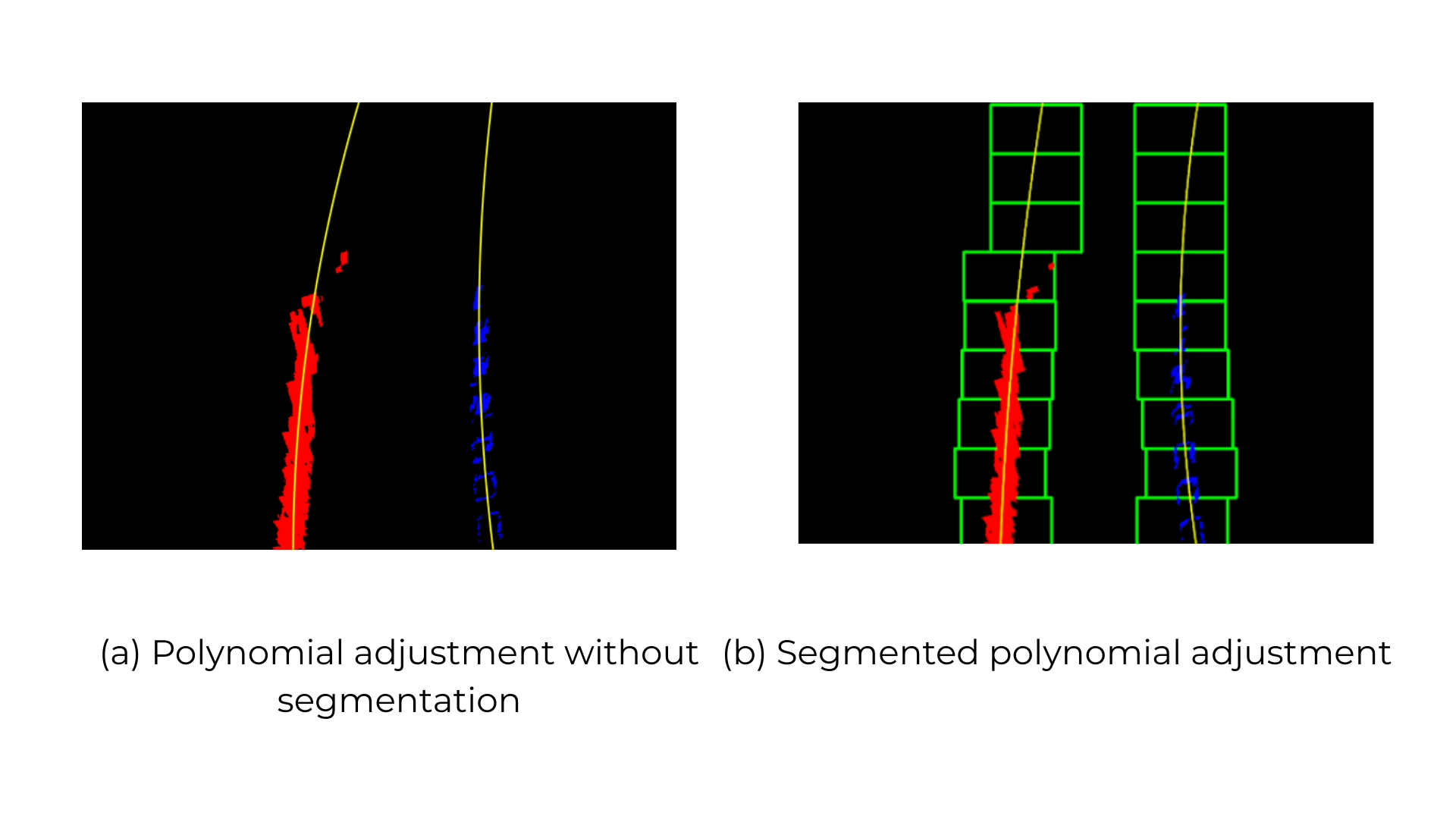
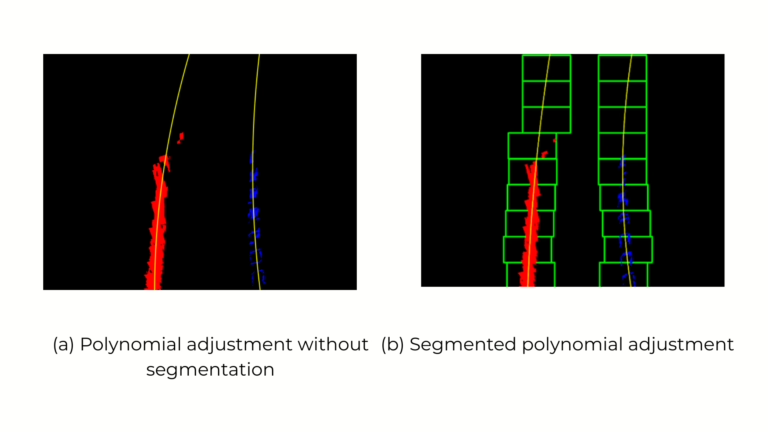
  • Piecewise polynomial fitting for path curvature estimation;

  • Closed-loop motion control based on computed linear and angular velocities.

The methodology demonstrates the feasibility of using camera-based perception to control robot motion in structured environments. By using Duckiebot and Duckietown as the development platform, this work is another example of how to bridge the gap between real-world testing and cost-effective prototyping, making vehicle autonomy research more accessible in educational and research contexts.

Highlights - visual feedback for lane tracking in Duckietown

Here is a visual tour of the implementation of vehicle autonomy by the authors. For all the details, check out the full paper.

Abstract

Here is the abstract of the work, directly in the words of the authors:

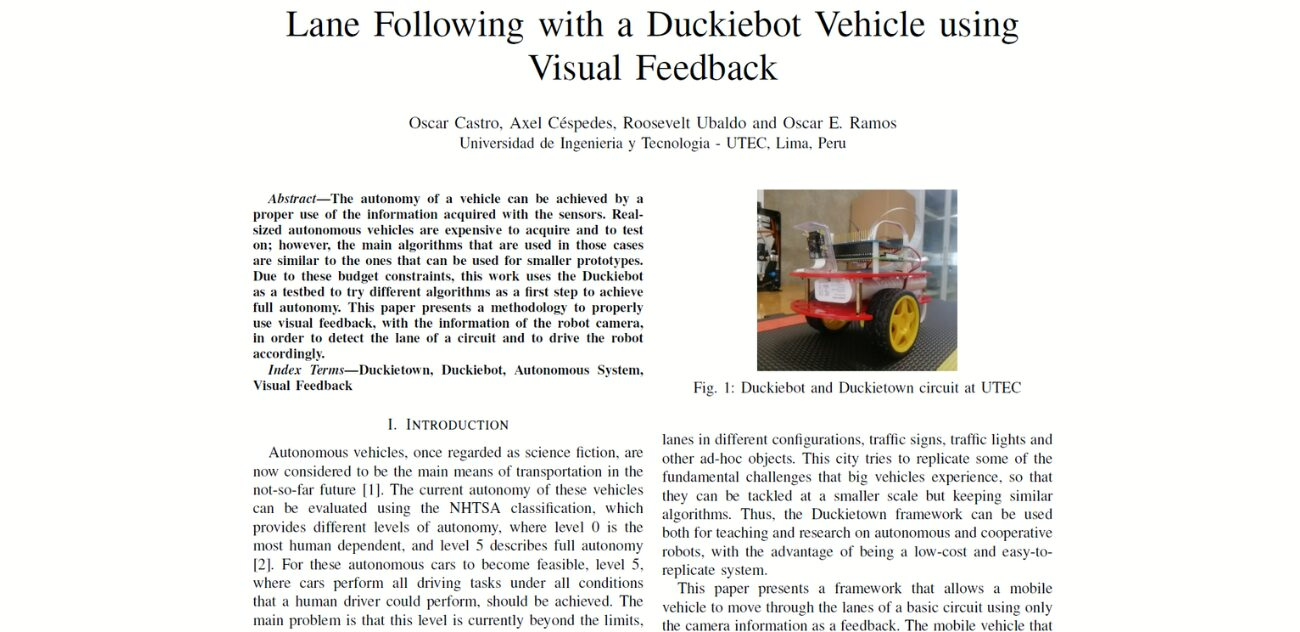
The autonomy of a vehicle can be achieved by a proper use of the information acquired with the sensors. Real-sized autonomous vehicles are expensive to acquire and to test on; however, the main algorithms that are used in those cases are similar to the ones that can be used for smaller prototypes. Due to these budget constraints, this work uses the Duckiebot as a testbed to try different algorithms as a first step to achieve full autonomy. This paper presents a methodology to properly use visual feedback, with the information of the robot camera, in order to detect the lane of a circuit and to drive the robot accordingly.

Conclusion - visual feedback for lane tracking in Duckietown

Here is the conclusion according to the authors of this paper:

Autonomous cars are currently a vast research area. Due to this increase in the interest of these vehicles, having a costeffective way to implement algorithms, new applications, and to test them in a controlled environment will further help to develop this technology. In this sense, this paper has presented a methodology for following a lane using a cost-effective robot, called the Duckiebot, using visual feedback as a guide for the motion. Although the whole system was capable of detecting the lane that needs to be followed, it is still sensitive to illumination conditions. Therefore, in places with a lot of lighting and brightness variations, the lane recognition algorithm can affect the autonomy of the vehicle.
As future work, machine learning, and particularly convolutional neural networks, is devised as a means to develop robust lane detectors that are not sensitive to brightness variation. Moreover, more than one Duckiebot is intended to drive simultaneously in the Duckietown.

Did this work spark your curiosity?

Project Authors

Oscar Castro is currently working at Blume, Peru.

Axel Eliam Céspedes Duran is currently working as a Laboratory Professor of the Industrial Instrumentation course at the UTEC – Universidad de Ingeniería y Tecnología, Peru.

Roosevelt Jhans Ubaldo Chavez is currently working as a Laboratory Professor of the Industrial Instrumentation course at the UTEC – Universidad de Ingeniería y Tecnología, Peru.

Oscar E. Ramos is currently working toward the Ph.D. degree in robotics with the Laboratory for Analysis and Architecture of Systems, Centre National de la Recherche Scientifique, University of Toulouse, Toulouse, France.

Learn more

Duckietown is a platform for creating and disseminating robotics and AI learning experiences.

It is modular, customizable and state-of-the-art, and designed to teach, learn, and do research. From exploring the fundamentals of computer science and automation to pushing the boundaries of knowledge, Duckietown evolves with the skills of the user.

Figueroa robotics in Peru

Making robotics in Peru more accessible

Making robotics in Peru more accessible

Nicolas Figueroa, CEO of NFM Robotics and Robotics Lab, shares his vision of making robotics in Peru and Latin America accessible.

Lima, Peru, June 2025: Dr. Nicolas Figueroa talks with us about his goal to make teaching and learning robotics in Peru and Latin America more accessible and efficient, and especially about his mission to strengthen Peruvian national industry through robotics.

Bringing cutting edge robotics in Peru

Good morning and thank you for your time. Could you introduce yourself please?

Sure. My name is Nícolas Figueroa. I’m the general manager of NFM Robotics, and I also run a nonprofit initiative called Robotics Lab.  I recently defended my thesis, so now I’m officially a doctor! 

Through Robotics Lab, we work with universities to promote robotics and robot autonomy education in Latin America, where there is still a significant gap in access to advanced robotics knowledge. I believe Duckietown offers an efficient and accessible way to help bridge this gap.

robotics in Peru
What can you tell us about your work?

My goal is to build a strong robotics community in Peru, and eventually throughout South America. 

I work closely with university student leadership. For example, students form directive committees, presidents, vice presidents, chairs, and they organize conferences, workshops, and talks to promote robotics and robot autonomy knowledge. I maintain close contact with engineering schools in the fields of mechatronics, industrial robotics and electronics. 

This connection allows me to support their efforts more effectively, even as an external partner. With NFM Robotics, we are seeing that the Peruvian industry is beginning to explore robotics, but isn’t widely adopted yet. There’s a big opportunity to offer high-level solutions, but we need more people trained in this technology. 

Duckietown helps us train teams in ROS and autonomous robotics. These teams can then support industry projects.

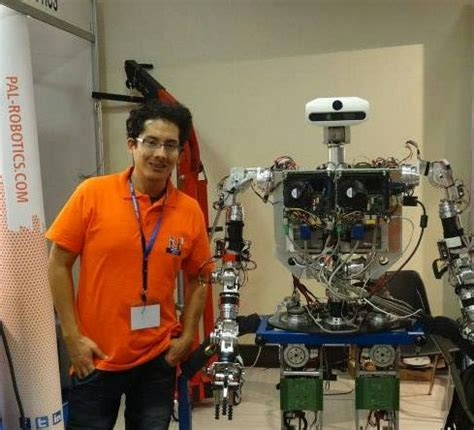
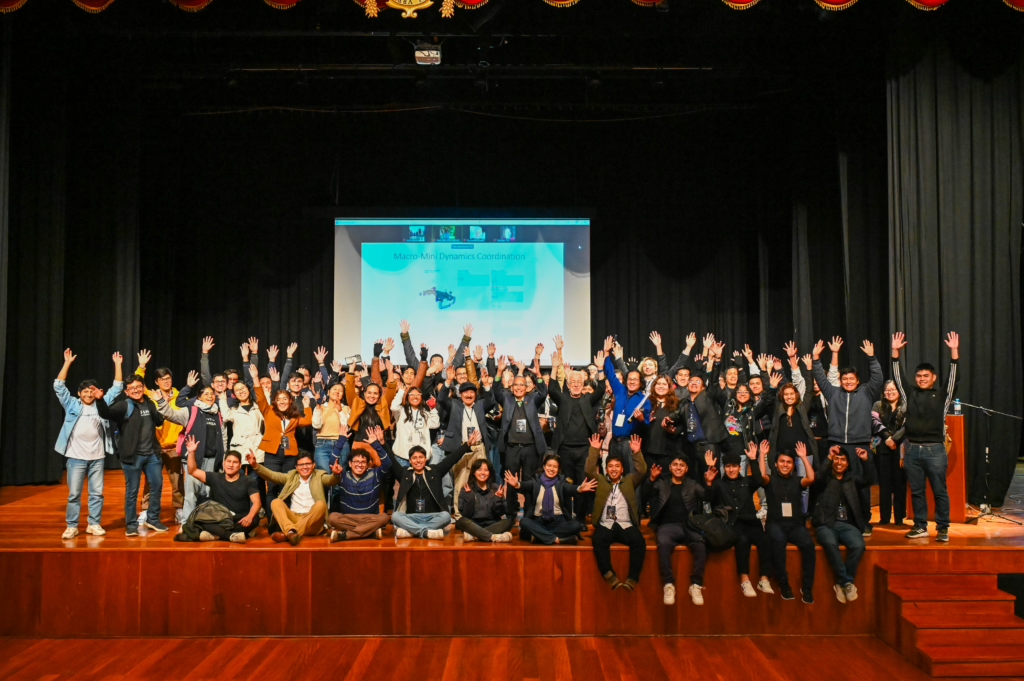
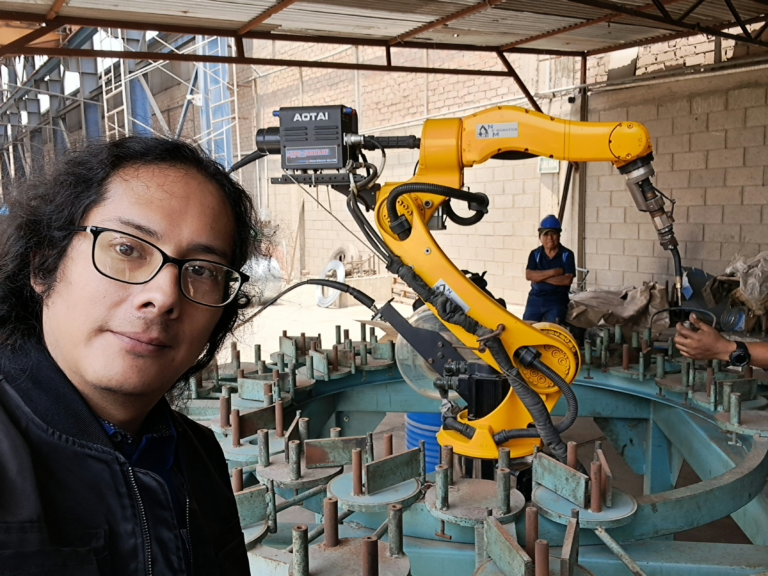
HRFEST 2024 robotics in Peru
So how is Duckietown useful for your work?

Considering that our target are both academic institutions for education, and industry for practical applications, I found Duckietown to be an incredible tool for introducing autonomous robotics. Its hands-on, accessible approach is key to closing the knowledge gap concerning robotics in Peru. When I first looked for platforms to teach autonomous robotics, I found that many options were either too expensive, had limited access, or didn’t support community engagement. 

Duckietown stood out as different, it empowers learners and prioritizes impact. That’s why I knew it was the right platform to support our mission at Robotics Lab.

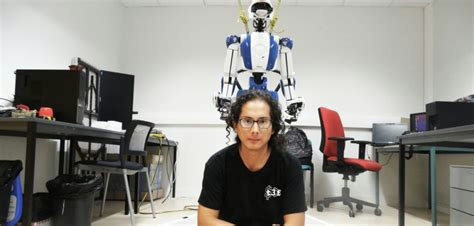
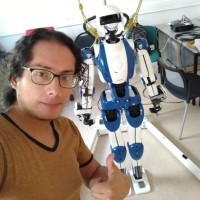
Prof. Figueroa with humanoid robot, robot autonomy

Through Robotics Lab, we work with universities to promote robotics education in Latin America, where there is still a significant gap in access to advanced robotics knowledge. I believe Duckietown offers an efficient and accessible way to help bridge this gap.

What is your current focus?

Right now, we are focusing on developing robotics in Peru as a pilot project. We’ve established a presence in five Peruvian universities. But by the end of this year and early next year, we plan to expand to other countries. For example, in May, we hosted a virtual lecture series with speakers from Germany, Italy, Spain, and Estonia. It was our first step in bringing our initiative to a broader international context.

robotics in Peru

I found Duckietown to be an incredible tool for introducing autonomous robotics. Its hands-on, accessible approach is key to closing the robotics knowledge gap.

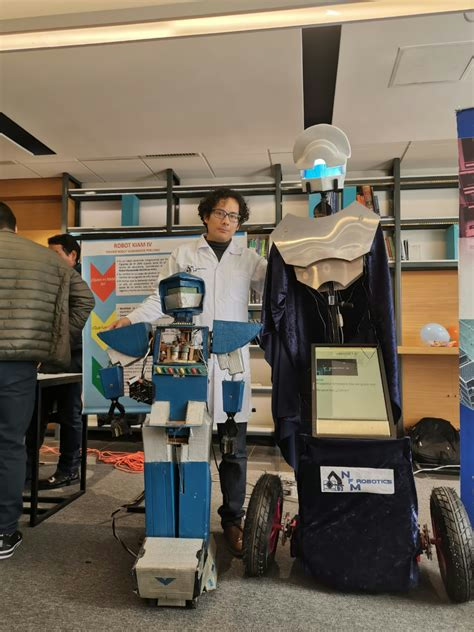
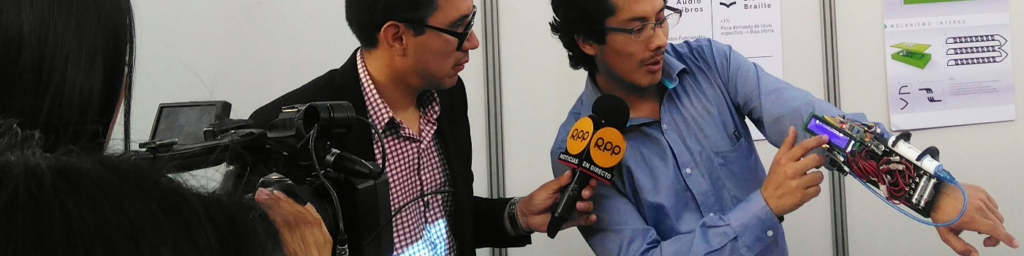
Nicolas Figueroa with journalist
Did Duckietown satisfy your needs?
Duckietown has become a valuable partner in our region. We’re working to bring this platform to more universities and training centers so more people can explore cutting-edge technology, reduce knowledge gaps, and prepare for Industry 4.0 challenges. We’re proud to be part of the Duckietown ecosystem and to contribute to its growth in Latin America. We hope to foster even more collaboration and opportunity for the next generation of roboticists.
robotics in Peru
Thank you very much for your time, any final comment?

The idea is to form a group within Robotics Lab to begin introducing autonomous robots and learning more deeply about robotic autonomy. We’re currently in discussions with some university faculties about establishing Duckietown-based laboratories, and we hope to promote our partnership with Duckietown even further.

robotics in Peru

Learn more about Duckietown

Duckietown enables state-of-the-art robotics and AI learning experiences.

It is designed to help teach, learn, and do research: from exploring the fundamentals of computer science and automation to pushing the boundaries of human knowledge.

Tell us your story

Are you an instructor, learner, researcher or professional with a Duckietown story to tell?

Reach out to us!