Autonomous Navigation and Parking in Duckietown
Project Resources
- Objective: Achieve autonomous navigation and parking in an intersection-equipped Duckietown city.
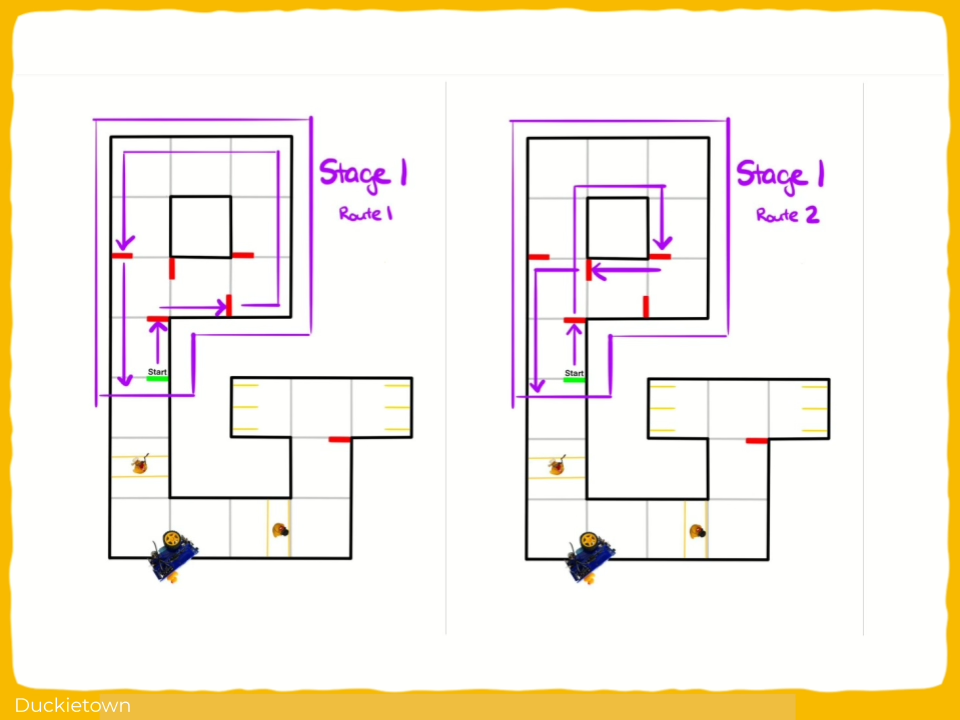
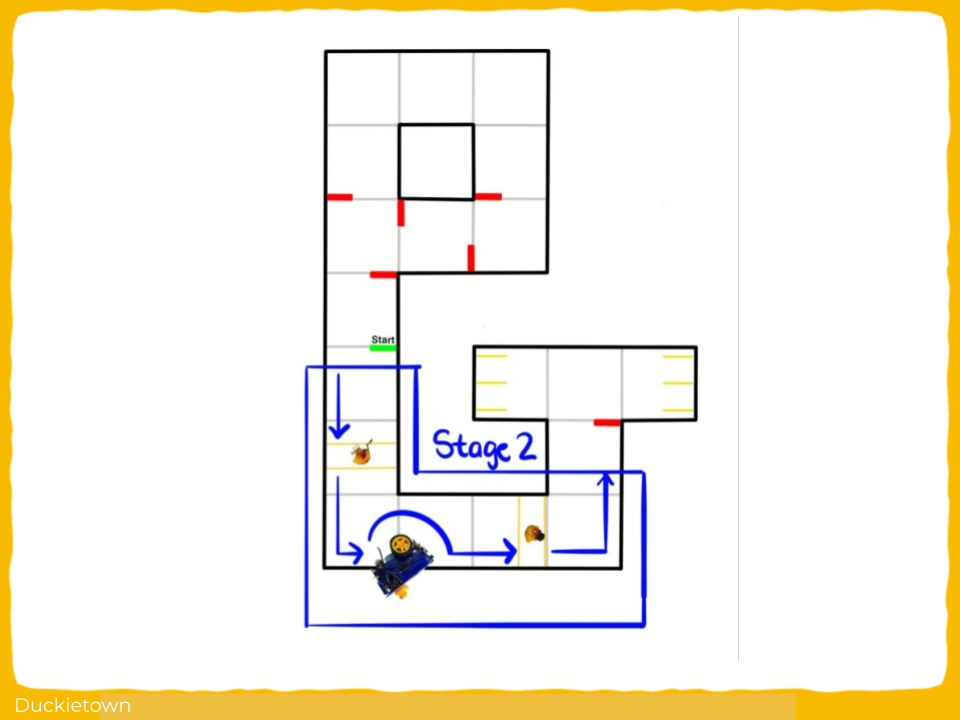
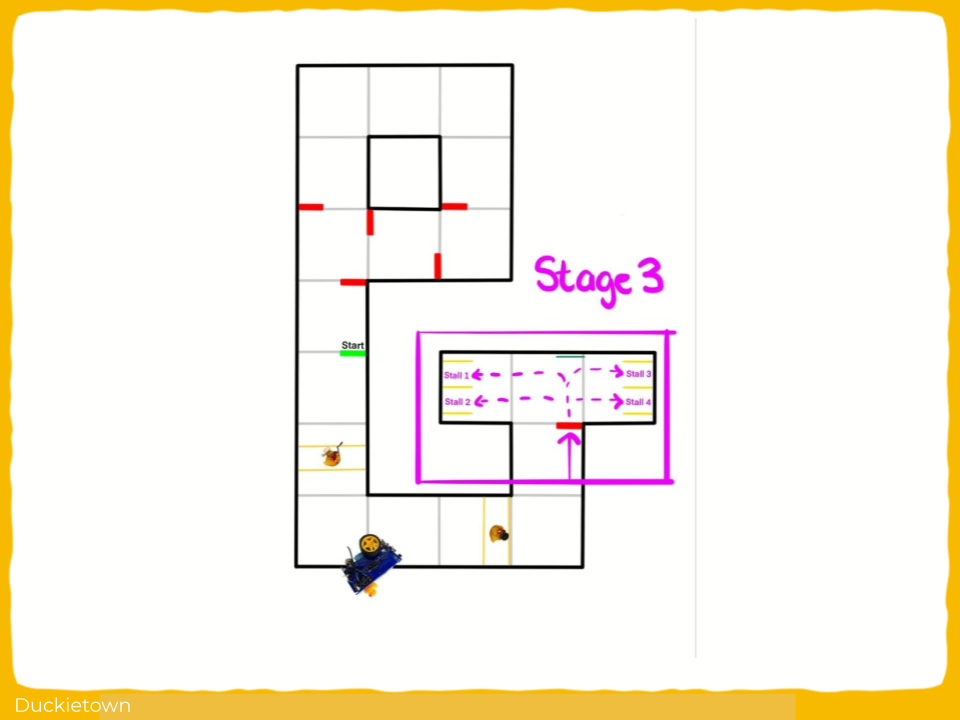
- Approach: Utilizing an FSM to transition between PID control-based lane following, intersection navigation, and parking using visual fiducial markers (AprilTags), color masking, and dead reckoning.
- Authors: Eric Khumbata, Cameron Hildebrandt, Jasper Eng from the University of Alberta.
- Course: This project is part of the CMPUT 412 Experimental Mobile Robotics course at the University of Alberta under Prof. Matthew E. Taylor.
Project highlights
Static parameters in a dynamic environment are pre-programmed failure points.
Autonomous Navigation and Parking in Duckietown: the objectives
This includes the development of a closed-loop PID control mechanism for continuous lane following, the use of AprilTag detection for intersection decision-making, and a state-driven behavior architecture to transition between tasks such as stopping, turning, and parking.
The system uses wheel encoder data for dead-reckoning-based motion execution in the absence of visual cues, and applies HSV-based color segmentation to detect and respond to static and dynamic obstacles. Visual servoing is used for parking alignment based on AprilTag localization. The control logic is modular and supports parameter tuning for hardware variability, with temporal filtering to suppress redundant detections and ensure stability.